<?xml version="1.0" encoding="utf-8" ?>
<rdf:RDF xmlns:rdf="http://www.w3.org/1999/02/22-rdf-syntax-ns#" xmlns:dc="http://purl.org/dc/elements/1.1/" xmlns:syn="http://purl.org/rss/1.0/modules/syndication/" xmlns="http://purl.org/rss/1.0/">


<channel rdf:about="https://old.giuri.unife.it/en/search_rss">
  <title>Department of Law</title>
  <link>https://old.giuri.unife.it</link>

  <description>
    
            These are the search results for the query, showing results 1 to 15.
        
  </description>


  <image rdf:resource="https://old.giuri.unife.it/logo.png"/>

  <items>
    <rdf:Seq>
      
        <rdf:li rdf:resource="https://old.giuri.unife.it/en/students/erasmus"/>
      
      
        <rdf:li rdf:resource="https://old.giuri.unife.it/en/welcome"/>
      
      
        <rdf:li rdf:resource="https://old.giuri.unife.it/en/visiting-professors/visiting-professors-letizia-gianformaggio-chair"/>
      
      
        <rdf:li rdf:resource="https://old.giuri.unife.it/en/students/copy_of_erasmus"/>
      
      
        <rdf:li rdf:resource="https://old.giuri.unife.it/en/students/students"/>
      
      
        <rdf:li rdf:resource="https://old.giuri.unife.it/en/students/italian-language-crash-course-advanced-to-b2"/>
      
      
        <rdf:li rdf:resource="https://old.giuri.unife.it/en/students/italian-language-crash-course-beginners-to-a2"/>
      
      
        <rdf:li rdf:resource="https://old.giuri.unife.it/en/students/contact-point"/>
      
      
        <rdf:li rdf:resource="https://old.giuri.unife.it/en/allegati/gvrkry.jpg"/>
      
      
        <rdf:li rdf:resource="https://old.giuri.unife.it/en/students/copy_of_introduction-to-eu-law"/>
      
      
        <rdf:li rdf:resource="https://old.giuri.unife.it/en/students/introduction-to-eu-law"/>
      
      
        <rdf:li rdf:resource="https://old.giuri.unife.it/en/students/f-a-q"/>
      
      
        <rdf:li rdf:resource="https://old.giuri.unife.it/en/students/arriving-in-ferrara"/>
      
      
        <rdf:li rdf:resource="https://old.giuri.unife.it/en/students/erasmus-traineeship"/>
      
      
        <rdf:li rdf:resource="https://old.giuri.unife.it/en/students/choice-of-courses"/>
      
    </rdf:Seq>
  </items>

</channel>


  <item rdf:about="https://old.giuri.unife.it/en/students/erasmus">
    <title>Erasmus +</title>
    <link>https://old.giuri.unife.it/en/students/erasmus</link>
    <description>Academic Year 2024/2025 </description>
    <content:encoded xmlns:content="http://purl.org/rss/1.0/modules/content/"><![CDATA[<p> </p>
<p> </p>
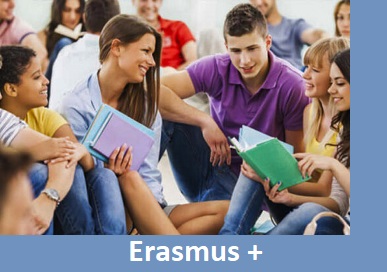
<p><i><img class="image-left" src="http://giuri.unife.it/en/allegati/erasmus.jpg" /></i></p>
<p>The Department of Law offers to Incoming students</p>
<p><i>- <a class="anchor-link" href="#Introductory courses">Introductory courses</a><br />- <a class="anchor-link" href="#-b-ordinary-courses--b-"><span class="anchor-link"><span class="anchor-link">Ordinary courses</span></span></a><br />- <a class="anchor-link" href="#Legal Language Courses">Legal Language Courses</a><br />- <a class="anchor-link" href="#Italian Language Courses">Italian Language Courses</a></i></p>
<p>The first semester begins on 30 September 2024; the second semester begins on 17 February 2025.</p>
<p><i>Introductory courses</i> and <i>Italian Language Courses</i> are  pre-semester courses: their beginning is planned, for the first  semester, on 16 September 2024 and, for the second semester, on 5  February 2025.</p>
<p>All the courses listed below are intended to be delivered in English unless otherwise specified.</p>
<p>A complete list of the courses included in the educational offer of the Department is available at the bottom of the page.</p>
<p> </p>
<p> </p>
<p class="callout"><b><a name="Introductory courses"></a>Introductory courses</b></p>
<p dir="ltr"> </p>
<p><b>Introduction to International and EU Law -</b> <span class="form-control-static iceOutTxt" id="j_id1263:j_id1541:j_id1546:j_id1607_attivita_formative_radici:0:column_label_j_id1657_afGenCod">6 ECTS</span><i><span class="form-control-static iceOutTxt" id="j_id1263:j_id1541:j_id1546:j_id1607_attivita_formative_radici:0:column_label_j_id1657_afGenCod"> </span></i><b><i><span class="form-control-static iceOutTxt" id="j_id1263:j_id1541:j_id1546:j_id1607_attivita_formative_radici:0:column_label_j_id1657_afGenCod"> - </span></i> (Professor <a class="external-link" href="http://docente.unife.it/serena.forlati">Serena Forlati</a>, Professor <a class="external-link" href="https://servizi.unife.it/rubrica/utenti/samuele-barbieri">Samuele Barbieri</a></b> <b>1<sup>st</sup> Semester) - </b><i>course code </i><span class="form-control-static iceOutTxt" id="j_id1263:j_id1541:j_id1546:j_id1607_attivita_formative_radici:0:column_label_j_id1657_afGenCod">62339</span></p>
<p><span style="text-align: justify; ">The course will provide an introduction to Public International Law and EU Law, where the special features of the EU integration process will be discussed and compared to those of Public International Law. The course will address the following topics: (i) historical evolution and general features of the international and the EU legal orders; (ii) international legal personality; (iii) a focus on international organizations: (a) the competences and institutional structure of the United Nations (b) the competences and institutional structure of the EU; (iv) (a) the sources of International Law; (b) the sources of EU Law; (v) implementation of International and EU Law in the Domestic Legal Orders; specifically, the Italian perspective; (vi) the responsibility for internationally wrongful acts; (vi) (a) the settlement of international disputes; specifically the role of international courts and tribunals; (b) the Court of Justice of the EU and the role of domestic jurisdictions in the implementation of EU Law; (vii) the protection of fundamental human rights in International and EU Law.</span></p>
<div></div>
<p>You can register yourself filling this <a class="external-link" href="https://forms.gle/URmAHemMBnxzvd7p9"><b>FORM</b></a></p>
<p style="text-align: justify; "><a class="external-link" href="http://www.giuri.unife.it/en/students/introduction-to-eu-law"><span class="external-link"> </span></a></p>
<p> </p>
<p class="callout"><a name="-b-ordinary-courses--b-"></a><b>Ordinary Courses</b></p>
<p> </p>
<li><b><span class="visualHighlight">Moot Court Competition</span></b><b> - </b><span class="form-control-static iceOutTxt" id="j_id1263:j_id1541:j_id1546:j_id1607_attivita_formative_radici:0:column_label_j_id1657_afGenCod">6 ECTS</span><b><i><span class="form-control-static iceOutTxt" id="j_id1263:j_id1541:j_id1546:j_id1607_attivita_formative_radici:0:column_label_j_id1657_afGenCod"> - </span></i>(Professor <a class="external-link" href="https://docente.unife.it/jacopofrancesco.alberti">Jacopo Alberti</a> - 1<sup>st</sup> Semester) - </b><i>course code </i><span class="form-control-static iceOutTxt" id="j_id1279:j_id1559:j_id1564:j_id1625_attivita_formative_radici:0:column_label_j_id1675_afGenCod">168393</span></li>
<p> </p>
<p>The Moot Court Competition will enable the participation of a Team of the University of Ferrara - Department of Law to the <a href="https://europeanlawmootcourt.eu/" target="_blank">European Law Moot Court Competition</a>, namely a simulation of a fictitious case pending before the Court of Justice of the EU.<br />Classes will be highly interactive and will aim at supporting the team to prepare the written and (eventually) oral pleadings.<br />The  specific topics will be driven by the peculiarity of the case that each  year is published by the ELMC Society. Generally speaking, the focus of  the course will thence be EU Law in general and EU Judicial Protection.<br />English is the working language. However, a good knowledge of French is highly appreciated.  Classes will be between September 1st and November 25th and its schedule will be decided together. If the team is selected for  the oral phase of the competition, further classes will be offered between the end of January and the end of April to help the team in preparing the pleadings.</p>
<div>The  participation to this course is open only to the students selected by  Prof. Jacopo Alberti. Students must be physically present in Ferrara on  September 15th at the latest and remain in Ferrara until at least  November 25th. Students that are interested in taking part to the course  can send a request of participation to <a href="mailto:jacopo.alberti@unife.it" target="_blank">jacopo.alberti@unife.it</a> .</div>
<div></div>
<div></div>
<div></div>
<div>
<ul>
<li><b>Equality and Non-Discrimination Law: Concepts and Challenges</b> - (<b>GIANFORMAGGIO CHAIR) </b><span class="form-control-static iceOutTxt" id="j_id1263:j_id1541:j_id1546:j_id1607_attivita_formative_radici:0:column_label_j_id1657_afGenCod"> </span>- <span class="iceOutTxt form-control-static" id="j_id1263:j_id1541:j_id1546:j_id1607_attivita_formative_radici:0:column_label_j_id1657_afGenCod">6 ECTS</span><i><span class="iceOutTxt form-control-static" id="j_id1263:j_id1541:j_id1546:j_id1607_attivita_formative_radici:0:column_label_j_id1657_afGenCod"> </span></i><b><i><span class="iceOutTxt form-control-static" id="j_id1263:j_id1541:j_id1546:j_id1607_attivita_formative_radici:0:column_label_j_id1657_afGenCod"> - </span></i>(Professor </b>Alexandra Timmer, <b>2<sup>nd</sup> Semester) - </b><i>course code<span class="form-control-static iceOutTxt" id="j_id1263:j_id1541:j_id1546:j_id1607_attivita_formative_radici:4:column_label_j_id1657_afGenCod"> </span></i>168593</li>
</ul>
<div></div>
<ul>
</ul>
</div>
<div><b>Under definition</b></div>
<div><b><br /></b></div>
<div></div>
<li><b>European Company Law<a class="external-link" href="http://www.unife.it/giurisprudenza/giurisprudenza/studiare/European%20Company%20Law%20"> </a>- </b><span class="form-control-static iceOutTxt" id="j_id1263:j_id1541:j_id1546:j_id1607_attivita_formative_radici:0:column_label_j_id1657_afGenCod">6 ECTS</span><i><span class="form-control-static iceOutTxt" id="j_id1263:j_id1541:j_id1546:j_id1607_attivita_formative_radici:0:column_label_j_id1657_afGenCod"> </span></i><b><i><span class="form-control-static iceOutTxt" id="j_id1263:j_id1541:j_id1546:j_id1607_attivita_formative_radici:0:column_label_j_id1657_afGenCod"> - </span></i>(Professor <a class="external-link" href="http://docente.unife.it/magdalenaelisabeth.deleeuw/">Magdalena Elisabeth de Leeuw</a>, 2<sup>nd</sup> Semester) - </b><i>course code<span class="iceOutTxt form-control-static" id="j_id1263:j_id1541:j_id1546:j_id1607_attivita_formative_radici:4:column_label_j_id1657_afGenCod"> <span class="form-control-static iceOutTxt" id="j_id1263:j_id1541:j_id1546:j_id1607_attivita_formative_radici:0:column_label_j_id1657_afGenCod">55539</span></span></i></li>
<p><span style="text-align: justify; ">The course aims at giving students a broad understanding of the legal measures adopted in this field of law by the EU institutions. As an introduction, the general characteristics of business organisations in Europe, as well as their main differences, will be analysed. There is no such thing as a comprehensive European company law, however, the harmonisation programme has created minimum standards in a number of areas, such as disclosure of company information, the capital of public limited liability companies, the rights of shareholders, takeover bids for public limited companies, domestic and cross-border mergers and divisions, minimum rules for single-member private limited liability companies and financial reporting and accounting. The analysis of the harmonisation programme is central to this course. Next, the case law of the European Court of Justice shall be scrutinised in detail. In a couple of landmark decisions, the Court has clarified some long pending questions concerning the freedom of establishment of companies in the EU (from </span><i style="text-align: justify; ">Daily Mail</i><span style="text-align: justify; "> to </span><i style="text-align: justify; ">Polbud</i><span style="text-align: justify; ">). Finally, the supranational business organisations, in particular the European Company (</span><i style="text-align: justify; ">Societas Europaea</i><span style="text-align: justify; ">) and the European Cooperative Society, are discussed. The course also incorporates recent developments, such as the newly adopted Directive on cross-border conversions and divisions, and the creation of companies fully online.</span></p>
<p> </p>
<li><b>European Criminal Law - </b><span class="form-control-static iceOutTxt" id="j_id1263:j_id1541:j_id1546:j_id1607_attivita_formative_radici:0:column_label_j_id1657_afGenCod">6 ECTS</span><i><span class="form-control-static iceOutTxt" id="j_id1263:j_id1541:j_id1546:j_id1607_attivita_formative_radici:0:column_label_j_id1657_afGenCod"> </span></i><b><i><span class="form-control-static iceOutTxt" id="j_id1263:j_id1541:j_id1546:j_id1607_attivita_formative_radici:0:column_label_j_id1657_afGenCod">-</span></i> (Professor <a class="external-link" href="http://docente.unife.it/ciro.grandi">Ciro Grandi</a>, 2<sup>nd</sup> Semester) - </b><i>course code<span class="form-control-static iceOutTxt" id="j_id1263:j_id1541:j_id1546:j_id1607_attivita_formative_radici:4:column_label_j_id1657_afGenCod"> <span class="iceOutTxt form-control-static" id="j_id1263:j_id1541:j_id1546:j_id1607_attivita_formative_radici:0:column_label_j_id1657_afGenCod"><span class="form-control-static iceOutTxt" id="j_id1263:j_id1541:j_id1546:j_id1607_attivita_formative_radici:0:column_label_j_id1657_afGenCod">55542</span></span></span></i></li>
<p><span style="text-align: justify; ">The first part of the course will address the impact of the European Convention on Human Rights on national criminal laws, with a focus on: Right to life (Art. 2); Prohibition of torture (Art. 3); Principle of legality (Art. 7); Right not to be tried or punished twice (Art. 4 Prot. 7). The second part of the course will address the developments of a European criminal policy and the interplays between EU law and national criminal law, with a focus on: (i) the lack of competence in criminal matters of European institutions under the founding Treaties; (ii) the harmonization of criminal offenses and sanctions in the European legal system; (iii) the EU third pillar under the Treaties of Maastricht and Amsterdam; (iv) the Area of Freedom Security and Justice under the Treaty of Lisbon; (v) the European Arrest Warrant; (vi) the role of fundamental rights in EU criminal law.</span></p>
<ul>
</ul>
<p><span style="text-align: justify; "> </span></p>
<li><b>International Human Rights - </b><span class="form-control-static iceOutTxt" id="j_id1263:j_id1541:j_id1546:j_id1607_attivita_formative_radici:0:column_label_j_id1657_afGenCod">6 ECTS</span><b><i><span class="form-control-static iceOutTxt" id="j_id1263:j_id1541:j_id1546:j_id1607_attivita_formative_radici:0:column_label_j_id1657_afGenCod"> -</span></i> (Dr  Khrystyna Gavrysh, 2<sup>nd</sup> Semester) - </b><span class="form-control-static iceOutTxt" id="j_id1263:j_id1541:j_id1546:j_id1607_attivita_formative_radici:1:column_label_j_id1657_afGenCod"><span class="iceOutTxt form-control-static" id="j_id1263:j_id1541:j_id1546:j_id1607_attivita_formative_radici:0:column_label_j_id1657_afGenCod"><i>course code </i></span>44236</span></li>
<p><span style="text-align: justify; ">The course will address the general framework of the protection of human rights in international law: (i) the multilevel protection of human beings in international law; the history of human rights and the role of the individual in the international legal system; (ii) the sources of international human rights law; (iii) the contents of human rights rules, with special reference to civil rights; basic notions of international criminal law and of international humanitarian law; (iv) the international responsibility for violations of human rights rules; (v) monitoring compliance with international human rights obligations: the role of diplomatic protection; UN Charter-based and treaty-based bodies; judicial enforcement, especially in the European system; criminal prosecution of human rights violations; civil suits against violation of human rights; and (vi) the effects of human rights rules on the Italian legal order.</span></p>
<p dir="ltr" style="text-align: justify; ">During the course, 3 or 4 seminars will be convened, either by the instructor of the course or by guest lecturers. Students will be asked to prepare in advance by reading some additional materials on a specific topic touched upon during the lectures and to engage actively in the discussion in class.</p>
<div style="text-align: justify; "></div>
<p> </p>
<li><b><span class="visualHighlight">International Labour Law</span> </b><b> - </b>3 ECTS<i> </i><b><i>-</i> (Professor Silvia Borelli, Professor Tzehainesh Teklè , 1st Semester) - </b> <span class="form-control-static iceOutTxt" id="j_id1279:j_id1559:j_id1564:j_id1625_attivita_formative_radici:0:column_label_j_id1675_afGenCod"><i>course code </i></span>131556</li>
<p>The course aims to provide students with:</p>
<p>i) knowledge about international labour law and its main source, that is international labour standards adopted by the International Labour Organisation (ILO) and</p>
<p>ii) an understanding of the role of international labour law in advancing social justice and realise decent work with a focus on the the right to equality and non-discrimination.</p>
<p>The course is structured in two parts.</p>
<p>In the first part, the origin and the history of ILO are illustrated. Moreover, the ILO's tripartite structure and its functioning are examined. The course then analyses the adoption of international labour standards and the ILO mechanisms to supervise their application at national level and to address their violations.</p>
<p>The second part of the course focuses with international labour law on (i) the right to equality and non-discrimination in the world of work, (ii) equal remuneration between men and women, (iii) the rights of persons with disabilities at work. The legal analyis is accompanied by the presentation of real case examples.</p>
<p>Students are invited to engage in class discussions. Moreover, lectures are followed by case studies or role plays, which aim to deepen their understanding and critical thinking of the course topics, and to help them reflect on the concrete impact of international labour.</p>
<li><b><span class="visualHighlight">International Taxation Law</span> - </b><span class="form-control-static iceOutTxt" id="j_id1263:j_id1541:j_id1546:j_id1607_attivita_formative_radici:0:column_label_j_id1657_afGenCod">6 ECTS</span><b><i><span class="form-control-static iceOutTxt" id="j_id1263:j_id1541:j_id1546:j_id1607_attivita_formative_radici:0:column_label_j_id1657_afGenCod"> - </span></i>(Professor <a class="external-link" href="http://docente.unife.it/marco.greggi">Marco Greggi</a>, 2<sup>nd</sup> Semester) - </b><span class="iceOutTxt form-control-static" id="j_id1263:j_id1541:j_id1546:j_id1607_attivita_formative_radici:1:column_label_j_id1657_afGenCod"><span class="form-control-static iceOutTxt" id="j_id1263:j_id1541:j_id1546:j_id1607_attivita_formative_radici:0:column_label_j_id1657_afGenCod"><i>course code</i></span></span><b><span class="iceOutTxt form-control-static" id="j_id1263:j_id1541:j_id1546:j_id1607_attivita_formative_radici:1:column_label_j_id1657_afGenCod"><span class="form-control-static iceOutTxt" id="j_id1263:j_id1541:j_id1546:j_id1607_attivita_formative_radici:0:column_label_j_id1657_afGenCod"><i> </i></span></span></b><span class="form-control-static iceOutTxt" id="j_id1263:j_id1541:j_id1546:j_id1607_attivita_formative_radici:0:column_label_j_id1657_afGenCod">55540</span></li>
<p>In an increasingly interconnected world, businesses and individuals operate across borders, encountering diverse tax systems and regulations. This course will equip you with the knowledge and skills to navigate the complexities of international taxation, empowering you to make informed decisions and optimize tax strategies in a global context.</p>
<p>We will delve into the fundamental principles that govern how countries tax cross-border transactions, investments, and income. You'll gain a deep understanding of the concept of double taxation, where the same income is potentially taxed by two or more countries, and explore the mechanisms in place to mitigate this issue, such as tax treaties and foreign tax credits.</p>
<p>Through real-world case studies and examples, you'll learn how to analyze the tax implications of various international activities, including import/export transactions, cross-border investments, and the establishment of foreign subsidiaries. We'll also examine the unique challenges posed by the digital economy, where businesses operate without a physical presence in a particular jurisdiction, and discuss the ongoing efforts to adapt tax rules to this evolving landscape.</p>
<p>By the end of this course, you'll be well-versed in the intricacies of international taxation, possessing the tools and knowledge to navigate this complex field with confidence. Irrespective of your previous knowledge of taxation (knowledge of domestic tax law is not necessary to take the course), this course will provide you with a comprehensive understanding of the principles and practices that shape the world of international taxation.</p>
<p><b>Course Objectives:</b></p>
<ol>
<li><b>Understanding the      Fundamentals:</b> Gain a solid foundation      in the principles of international taxation, including the power of states      to tax, the concept of double taxation, and the interplay between domestic      and international tax laws.</li>
<li><b>Analyzing Tax Treaties:</b> Explore the role of tax treaties in preventing      double taxation and fostering cross-border trade and investment. Dive into      the OECD and UN Model Conventions, examining key provisions related to      permanent establishment, residence, and passive income.</li>
<li><b>Mastering Tax Planning      Strategies:</b> Learn practical      techniques to minimize tax liabilities while ensuring compliance with      international tax regulations. Develop critical thinking skills to assess      the feasibility and effectiveness of various tax planning approaches.</li>
<li><b>Real-World Applications:</b> Engage with real-world case studies and      scenarios to apply your knowledge to practical situations. Analyze the tax      implications of cross-border transactions, mergers and acquisitions, and      international investments.</li>
<li><b>Staying Ahead of the      Curve:</b> Explore emerging trends      and challenges in international taxation, such as the digital economy,      transfer pricing, and the impact of globalization on tax policies.</li>
</ol>
<p>In academic Year 2024 -2025 the course will be integrated with seminars and workshops, and host prominent academics from partner Universities.</p>
<li><b>International Trade Law - </b><span class="form-control-static iceOutTxt" id="j_id1263:j_id1541:j_id1546:j_id1607_attivita_formative_radici:0:column_label_j_id1657_afGenCod">6 ECTS</span><b><i><span class="form-control-static iceOutTxt" id="j_id1263:j_id1541:j_id1546:j_id1607_attivita_formative_radici:0:column_label_j_id1657_afGenCod"> - </span></i>(Professor <a class="external-link" href="http://docente.unife.it/magdalenaelisabeth.deleeuw/">Magdalena Elisabeth de Leeuw</a>, 1<sup>st</sup> Semester) - </b><span class="form-control-static iceOutTxt" id="j_id1263:j_id1541:j_id1546:j_id1607_attivita_formative_radici:1:column_label_j_id1657_afGenCod"><span class="iceOutTxt form-control-static" id="j_id1263:j_id1541:j_id1546:j_id1607_attivita_formative_radici:0:column_label_j_id1657_afGenCod"><i>course code</i></span></span><b><span class="form-control-static iceOutTxt" id="j_id1263:j_id1541:j_id1546:j_id1607_attivita_formative_radici:1:column_label_j_id1657_afGenCod"><span class="iceOutTxt form-control-static" id="j_id1263:j_id1541:j_id1546:j_id1607_attivita_formative_radici:0:column_label_j_id1657_afGenCod"><i> </i></span></span></b><span class="form-control-static iceOutTxt" id="j_id1263:j_id1541:j_id1546:j_id1607_attivita_formative_radici:0:column_label_j_id1657_afGenCod">55538</span></li>
<p><span style="text-align: justify; ">The course International Trade law is divided into two parts. The first and main part of the course addresses cross-border private transactions, focusing on the international sale of goods and on the various relations that arise as a result of a sales contract. Topics include: the UN Convention on the International Sale of Goods (CISG, 1980), the UNIDROIT Principles of International Commercial Contracts, Incoterms 2020, international transportation of cargo by sea and road, including the Hague-Visby Rules and the Rotterdam Rules, and the Convention on the International Carriage of Goods by Road (CMR). An important aspect of an international sales transaction is insurance for loss and damage to cargo while in transit. Since most cargo is still transported by sea, the discussion shall focus on marine insurance. Attention is further paid to the issue of dispute resolution by domestic courts, arbitration and mediation, as well as the applicable law to cross-border disputes. The second part of the course focuses on the regulatory relationship between public authorities and traders, analysing in particular the rules laid down in WTO agreements with regard, inter alia, to tariffs and duties, subsidies and countervailing measures. At the end of the course students will have a clear overview of the complexities of an international sales transaction through the analysis of international conventions and rules, legislation and case law.</span></p>
<p><span style="text-align: justify; "><br /></span></p>
<li><b><span class="visualHighlight">Private International Law </span>- </b><span class="form-control-static iceOutTxt" id="j_id1263:j_id1541:j_id1546:j_id1607_attivita_formative_radici:0:column_label_j_id1657_afGenCod">6 ECTS</span><b><i><span class="form-control-static iceOutTxt" id="j_id1263:j_id1541:j_id1546:j_id1607_attivita_formative_radici:0:column_label_j_id1657_afGenCod"> - </span></i>(Dr.<a class="external-link" href="https://docente.unife.it/ilaria.aquironi"> Ilaria Aquironi</a>, 2<sup>nd</sup> Semester) - </b><i><span class="iceOutTxt form-control-static" id="j_id1263:j_id1541:j_id1546:j_id1607_attivita_formative_radici:0:column_label_j_id1657_afGenCod"><span class="form-control-static iceOutTxt" id="j_id1263:j_id1541:j_id1546:j_id1607_attivita_formative_radici:0:column_label_j_id1657_afGenCod"><span class="iceOutTxt form-control-static" id="j_id1263:j_id1541:j_id1546:j_id1607_attivita_formative_radici:1:column_label_j_id1657_afGenCod"><span class="form-control-static iceOutTxt" id="j_id1263:j_id1541:j_id1546:j_id1607_attivita_formative_radici:0:column_label_j_id1657_afGenCod">course code</span></span></span></span></i><b><i><span class="iceOutTxt form-control-static" id="j_id1263:j_id1541:j_id1546:j_id1607_attivita_formative_radici:0:column_label_j_id1657_afGenCod"><span class="form-control-static iceOutTxt" id="j_id1263:j_id1541:j_id1546:j_id1607_attivita_formative_radici:0:column_label_j_id1657_afGenCod"><span class="iceOutTxt form-control-static" id="j_id1263:j_id1541:j_id1546:j_id1607_attivita_formative_radici:1:column_label_j_id1657_afGenCod"><span class="form-control-static iceOutTxt" id="j_id1263:j_id1541:j_id1546:j_id1607_attivita_formative_radici:0:column_label_j_id1657_afGenCod"> </span></span></span></span></i></b><span class="form-control-static iceOutTxt" id="j_id1263:j_id1541:j_id1546:j_id1607_attivita_formative_radici:0:column_label_j_id1657_afGenCod">52860</span></li>
<p dir="ltr" style="text-align: justify; ">Legal relationships within the area of private law often feature connections with two or more countries, thereby displaying an international character. Private international law deals with those cases. Its rules address the challenges posed by legal diversity, with the aim of providing certainty and ensuring the cross-border continuity of the rights of those involved. In the first part of the course, a selection of private international law instruments will be examined. The focus will beon the rules enacted by the EU as regards contracts and  torts, although some references will also be made to the area of family law. Topics include: (i) the object and function of private international law; (ii) adjudicatory jurisdiction; (iii) the law applicable to cross-border legal relationships; (iv) recognition and enforcement of foreign judgments; and (v) international judicial assistance. In the second part, the role of private international law in addressing modern challenges, such as corporate social responsibility and climate change, will be addressed.</p>
<p> </p>
<ul>
<li><span class="visualHighlight"><b>The transformation of the European Union's Public Finances Post-Next Generation EU</b> - 3 ECTS<b><i> </i></b><b>- </b><b>(Professor <a class="external-link" href="http://docente.unife.it/marco.greggi">Marco Greggi</a> , </b><b>2<sup>nd</sup> Semester</b><b>) - </b> <i>course code </i>168194</span></li>
</ul>
<p>The course offered examines the transformative impact of the Next Generation EU (NGEU) program on the European Union's (EU) public finances. It delves into the unprecedented fiscal measures implemented during the COVID-19 pandemic and their long-term implications for the EU's budgetary framework, debt sustainability, and economic governance. <br />The course analyzes the shift towards a more centralized fiscal policy, the emergence of new financial instruments such as the SURE mechanism and EU bonds, and the evolving role of the European Commission in managing the EU's finances. <br />Additionally, it explores the challenges and opportunities arising from the NGEU's focus on green and digital transitions, social cohesion, and resilience. By critically assessing the successes and shortcomings of the NGEU, this course provides students with a comprehensive understanding of the evolving landscape of EU public finances in the post-pandemic era.</p>
<ul>
</ul>
<div></div>
<ul>
</ul>
<div></div>
<ul>
</ul>
<div></div>
<ul>
<li><span class="visualHighlight"><b>Transnational Organized Crime</b> (<b>GIANFORMAGGIO CHAIR) </b></span><span class="iceOutTxt form-control-static" id="j_id1263:j_id1541:j_id1546:j_id1607_attivita_formative_radici:0:column_label_j_id1657_afGenCod"><b>-</b> 6 ECTS</span><b><i><span class="iceOutTxt form-control-static" id="j_id1263:j_id1541:j_id1546:j_id1607_attivita_formative_radici:0:column_label_j_id1657_afGenCod"> </span></i></b><b>- </b><b>(Professor <a class="external-link" href="https://www.google.com/url?sa=t&amp;source=web&amp;rct=j&amp;opi=89978449&amp;url=">Andreas Schloenhardt</a> , 1st Semester) - </b> <span class="iceOutTxt form-control-static" id="j_id1279:j_id1559:j_id1564:j_id1625_attivita_formative_radici:0:column_label_j_id1675_afGenCod"><i>course code </i></span>168193</li>
</ul>
<p>This course explores the international legal  framework to prevent and suppress transnational organised crime,  including drug trafficking, smuggling of migrants, trafficking in  persons, wildlife trafficking and other crime types.  The course  outlines and examines the criminology, levels, patterns, and modi  operandi of these crimes, their criminalisation in international law,  and analyses national, regional, and international strategies to  investigate such crime and prosecute offenders.<span style="text-decoration: underline;"></span><span style="text-decoration: underline;"></span></p>
<p>The  course gives students a comprehensive understanding of contemporary  patterns and characteristics of transnational organised crime and  relevant international conventions.  The seminars, exercises and  working-group sessions during the course invite students to critically  reflect on the nature and limitations of international criminal law  conventions and understand the rationale of international, regional, and  domestic policies in this area. <span style="text-decoration: underline;"></span><span style="text-decoration: underline;"></span></p>
<p>The  course further seeks to improve students’ communication, presentation,  discussion, and writing skills.  The course enhances students’ abilities  to research policy documents and legal material, critically analyse  legislation, case studies and scholarly writing, present to an academic  audience, and elaborate practical recommendations for law reform and  policy change relevant to the subject area.<span style="text-decoration: underline;"></span><span style="text-decoration: underline;"></span></p>
<p>Note: The course will be taught and all assessment will be conducted exclusively in English language.</p>
<p><b><br /></b></p>
<p style="text-align: justify; "> </p>
<p class="callout"><b><a name="Legal Language Courses"></a>Legal Language Courses</b></p>
<p> </p>
<li><b>Advanced Legal English - </b><span class="form-control-static iceOutTxt" id="j_id1263:j_id1541:j_id1546:j_id1607_attivita_formative_radici:0:column_label_j_id1657_afGenCod">6 ECTS</span><b><i><span class="form-control-static iceOutTxt" id="j_id1263:j_id1541:j_id1546:j_id1607_attivita_formative_radici:0:column_label_j_id1657_afGenCod"> - </span></i>(Professor <a class="external-link" href="http://docente.unife.it/magdalenaelisabeth.deleeuw/">Magdalena Elizabeth De Leeuw</a>, 2<sup>nd</sup> Semester) - </b><i><span class="form-control-static iceOutTxt" id="j_id1263:j_id1541:j_id1546:j_id1607_attivita_formative_radici:0:column_label_j_id1657_afGenCod"><span class="iceOutTxt form-control-static" id="j_id1263:j_id1541:j_id1546:j_id1607_attivita_formative_radici:0:column_label_j_id1657_afGenCod"><span class="form-control-static iceOutTxt" id="j_id1263:j_id1541:j_id1546:j_id1607_attivita_formative_radici:1:column_label_j_id1657_afGenCod"><span class="iceOutTxt form-control-static" id="j_id1263:j_id1541:j_id1546:j_id1607_attivita_formative_radici:0:column_label_j_id1657_afGenCod">course code </span></span></span></span></i><span class="form-control-static iceOutTxt" id="j_id1263:j_id1541:j_id1546:j_id1607_attivita_formative_radici:0:column_label_j_id1657_afGenCod">55793</span></li>
<p><span style="text-align: justify; ">The course aims to familiarise students with the workings of a common law legal system, and to develop competence in legal English to an advanced level in all four-language areas (reading, writing, listening and speaking). Students are required to have a level of B2 or higher. To maintain active participation, students must participate in class exercises and discussions, submit assignments and do group work. The course is divided into two parts.</span></p>
<p style="text-align: justify; ">The first part addresses the essential points that students from civil law countries need to understand in approaching the study of legal English as a legal language, with a focus on the following topics: (i) legal English as part of the common law tradition; (ii) the legacy of English legal history; (iii) the doctrine of binding precedent; (iv) common law lawyers’ attitudes towards law: procedural thinking and procedural language; (v) the role of legislation and the style of law-making; and (vi) the interpretation of statutes. The second part of the course aims to improve students’ ability to read and understand legal texts, such as legal periodicals, commercial legislation, legal correspondence and other types of legal documents.</p>
<p style="text-align: justify; ">Students will improve their understanding of spoken English used to talk about legal topics in meetings, presentations, interviews and discussions.  There will be the opportunity to practice speaking skills in a range of situations typical of legal practice, such as client interviews, discussions with colleagues and contract negotiations.</p>
<p style="text-align: justify; "> </p>
<li><b><span class="visualHighlight">Introduction au droit français [Introduction to French law]</span> - </b><span class="iceOutTxt form-control-static" id="j_id1263:j_id1541:j_id1546:j_id1607_attivita_formative_radici:0:column_label_j_id1657_afGenCod">6 ECTS</span><b><i><span class="iceOutTxt form-control-static" id="j_id1263:j_id1541:j_id1546:j_id1607_attivita_formative_radici:0:column_label_j_id1657_afGenCod"> </span></i>- (Professor <a class="external-link" href="http://servizi.unife.it/rubrica/utenti/laurence-klesta">Laurence Klesta</a>, 1<sup>st</sup> Semester) - </b><span class="iceOutTxt form-control-static" id="j_id1263:j_id1541:j_id1546:j_id1607_attivita_formative_radici:0:column_label_j_id1657_afGenCod"><span class="form-control-static iceOutTxt" id="j_id1263:j_id1541:j_id1546:j_id1607_attivita_formative_radici:1:column_label_j_id1657_afGenCod"><span class="iceOutTxt form-control-static" id="j_id1263:j_id1541:j_id1546:j_id1607_attivita_formative_radici:0:column_label_j_id1657_afGenCod"><i>course code </i></span></span>59277</span></li>
<p><span style="text-align: justify; ">The course aims to provide an introduction to French legal culture. Students will discover new legal rules using appropriate language. The purpose is to situate French Law in the context of other legal systems, specially Italian law and European law, by focusing on the meaning and relativity of the transalpine legal order. The course will also address the inherent dynamic nature of French rules to cope with new societal challenges paying special attention to relevant case law </span>historical process and fair trial issues. <span style="text-align:justify; ">It  will be organized into two main parts: (1) The foundations of French  Law  (sources, features, distinction between objective law and subjective  rights,statute law, judicial review); (2) The implementation of French  Law (principle of non retroactivity, proper meaning of legal rules,  enforcement and burden of proof). </span><span class="im"> </span></p>
<div><span style="text-align:justify; ">The course is in French.</span></div>
<p> </p>
<div></div>
<p> </p>
<li><b><span class="visualHighlight">Legal English</span> - </b><span class="form-control-static iceOutTxt" id="j_id1263:j_id1541:j_id1546:j_id1607_attivita_formative_radici:0:column_label_j_id1657_afGenCod">6 ECTS</span><b><i><span class="form-control-static iceOutTxt" id="j_id1263:j_id1541:j_id1546:j_id1607_attivita_formative_radici:0:column_label_j_id1657_afGenCod"> -</span></i> (Dr<a class="external-link" href="https://docente.unife.it/ilaria.aquironi"> Ilaria Aquironi</a>, 1<sup>st</sup> Semester) - </b><i><span class="iceOutTxt form-control-static" id="j_id1263:j_id1541:j_id1546:j_id1607_attivita_formative_radici:0:column_label_j_id1657_afGenCod"><span class="form-control-static iceOutTxt" id="j_id1263:j_id1541:j_id1546:j_id1607_attivita_formative_radici:0:column_label_j_id1657_afGenCod"><span class="iceOutTxt form-control-static" id="j_id1263:j_id1541:j_id1546:j_id1607_attivita_formative_radici:1:column_label_j_id1657_afGenCod"><span class="form-control-static iceOutTxt" id="j_id1263:j_id1541:j_id1546:j_id1607_attivita_formative_radici:0:column_label_j_id1657_afGenCod">course code </span></span></span></span></i><span class="form-control-static iceOutTxt" id="j_id1263:j_id1541:j_id1546:j_id1607_attivita_formative_radici:0:column_label_j_id1657_afGenCod">013934</span> </li>
<p> </p>
<div>Placed  within the framework of English for Specific Purposes, the course aims  to explore the specificities of the English language in the legal  sphere. After an introduction to the Anglo-Saxon legal system, with  particular reference to English common law, the course will explore the  linguistic specificities of civil and criminal law. In the second part,  the course will delve into the peculiarities of International and  European Union law, with a focus on the protection of human rights. The  third part of the course will be devoted to the linguistic specificities  of International contract and company law.</div>
<p>Lectures will mainly be conducted in English.</p>
<p> </p>
<li><b>Legal Spanish - </b><span class="form-control-static iceOutTxt" id="j_id1263:j_id1541:j_id1546:j_id1607_attivita_formative_radici:0:column_label_j_id1657_afGenCod">6 ECTS</span><b><i><span class="form-control-static iceOutTxt" id="j_id1263:j_id1541:j_id1546:j_id1607_attivita_formative_radici:0:column_label_j_id1657_afGenCod"> -</span></i> (Professor Maria Del Carmen Portaceli Sevillano, 2<sup>nd</sup> Semester) - </b><span class="form-control-static iceOutTxt" id="j_id1263:j_id1541:j_id1546:j_id1607_attivita_formative_radici:0:column_label_j_id1657_afGenCod"><i><span class="form-control-static iceOutTxt" id="j_id1263:j_id1541:j_id1546:j_id1607_attivita_formative_radici:0:column_label_j_id1657_afGenCod"><span class="iceOutTxt form-control-static" id="j_id1263:j_id1541:j_id1546:j_id1607_attivita_formative_radici:0:column_label_j_id1657_afGenCod"><span class="form-control-static iceOutTxt" id="j_id1263:j_id1541:j_id1546:j_id1607_attivita_formative_radici:1:column_label_j_id1657_afGenCod"><span class="iceOutTxt form-control-static" id="j_id1263:j_id1541:j_id1546:j_id1607_attivita_formative_radici:0:column_label_j_id1657_afGenCod">course code </span></span></span></span></i>54588</span> </li>
<p>The main objective of the course is to achieve sufficient competency in legal Spanish so as to be able to develop coherent, logical, accurate and appropriate Spanish legal terminology, spoken discourse; to be able to look up and comment on legal texts in Spanish and to be able to discuss legal topics. Learning Spanish cultural legal concepts, through texts and the latest key legislation, also forms part of the course objectives. Constitutional, Civil, Criminal and Procedural Law will be studied. The classes will be held entirely in Spanish.</p>
<p> </p>
<p class="callout"><b><a name="Italian Language Courses"></a>Italian Language Courses</b></p>
<p> </p>
<li><b>Italian Language Crash Course (Beginners to A2, 5ECTS)</b> - (Francesca Carpanelli, First Semester: 16-27 September)</li>
<p>The Language Centre of the University of Ferrara offers several opportunities for incoming students to learn Italian, but we strongly suggest students who are enrolling at our Department of Law and who are interested in a beginners' course to join our own free intensive course. This course is specifically designed to meet their linguistic needs, while avoiding overlaps with their academic schedule. Although this course is an intensive pre-semester class, it can be regularly included in your Learning Agreement. Students passing the exam will be awarded 5 ECTS.</p>
<p>Availability of the course subject to a minimum of 5 registered students. Please note: you are entitled to take more than one language course, but you will earn only 5 ECTS in total.</p>
<p>You can register yourself filling this <b><a class="external-link" href="https://forms.gle/PfQHKrKJw9snsNo89">FORM</a></b></p>
<p> </p>
<li><b>Italian Language Crash Course (Advanced to B2, 5ECTS)</b> - (Roberta Gulinelli, First Semester: 16-27 September) </li>
<p>This course is specifically designed to meet linguistic needs of students that attend a Double-degree course and students who wish to deepen their linguistic knowledge. Although this course is an intensive pre-semester class, it can be regularly included in your Learning Agreement. Students passing the exam will be awarded 5 ECTS.</p>
<p>Please note: you are entitled to take more than one language course, but you will earn only 5 ECTS in total.</p>
<p>You can register yourself filling this <b> </b><b><a class="external-link" href="https://forms.gle/gWuWWc9UsAtu29oc8">FORM</a></b></p>
<p> </p>
<p> </p>
<p><b><i>The Department of Law at the University of Ferrara currently offers</i>:</b></p>
<div class="gmail_default">
<ul>
<li> <a class="external-link" href="https://corsi.unife.it/lm-giurisprudenza/studiare/didattica/progr/programma-del-corso-e-dei-curricula"><span class="external-link">A Single-Cycle Degree in Law, in Ferrara</span></a></li>
</ul>
</div>
<ul>
<li><a class="external-link" href="https://corsi.unife.it/lm-giurisprudenza-rovigo/studiare/didattica/progr/programma-del-corso-e-dei-curricula"><span class="external-link">A Single-Cycle Degree in Law, in the satellite campus of Rovigo (40 km north of Ferrara)</span></a><span class="gmail_default"> </span></li>
<li><a class="external-link" href="https://corsi.unife.it/scienze-giuridiche/studiare/didattica/progr/programma-del-corso-e-dei-curricula"><span class="external-link">A three-year Degree in Legal Services, in Ferrara</span></a></li>
</ul>
<p><span class="gmail_default"><br /></span></p>
<p>The students can also activate a <b><a class="external-link" href="http://www.giuri.unife.it/it/didattica/studenti1/tirocini">traineeship</a>.</b></p>]]></content:encoded>
    <dc:publisher>No publisher</dc:publisher>
    <dc:creator>Maranini Rossella</dc:creator>
    <dc:rights></dc:rights>
    <dc:date>2024-07-23T10:43:07Z</dc:date>
    <dc:type>Page</dc:type>
  </item>


  <item rdf:about="https://old.giuri.unife.it/en/welcome">
    <title> </title>
    <link>https://old.giuri.unife.it/en/welcome</link>
    <description></description>
    <content:encoded xmlns:content="http://purl.org/rss/1.0/modules/content/"><![CDATA[<p>The <b>Department of Law of the University of Ferrara</b>, widely recognized among the leading Italian institutions in its field, is renowned for its <b>strong emphasis on the European and International dimension of its study programme</b>. We are committed to offering our students a wide range of opportunities to include international experiences in their curriculum. Notwithstanding the significant challenges it has posed, <b>the Covid pandemic has only strengthened our belief that this is an essential aspect of our educational offer</b>.</p>
<p>We are in close contact with our extensive <b>network of international partners,</b> and have now fully resumed student and staff mobility programmes. <b>Teaching will be mainly face-to-face in 2023-24</b>.</p>
<p>We look forward to welcoming guest students from all over the world into our historic buildings <b>in the centre of Ferrara</b>. This beautiful renaissance city reverberates with university life and yet enjoys the safety of a small and quiet town; 20.000 students live on its urban campus (out of a population of 130.000 people), with a wide range of services for study, research, practicing sports and having a good time.</p>
<p dir="ltr"><span>Lectures and conferences also give our guests the opportunity to visit our </span><b><a class="external-link" href="http://www.giuri.unife.it/it/didattica/corsi-di-laurea/corso-di-laurea-magistrale-a-ciclo-unico-in-giurisprudenza-sede-di-rovigo"><span>Rovigo campus</span></a><span> </span></b><span>. Since 2019 the Department has been located in</span><span> </span><b><a class="external-link" href="https://www.google.com/url?sa=t&amp;rct=j&amp;q=&amp;esrc=s&amp;source=web&amp;cd=&amp;cad=rja&amp;uact=8&amp;ved=2ahUKEwiWvO7IqY3qAhXSZxUIHZLKAioQFjAAegQIBBAB&amp;url=http%3A%2F%2Fwww.palazzoangeli.it%2F&amp;usg=AOvVaw0B81LYEU-nhxkT3RP4RVgS"><span>Palazzo Angeli</span></a><span> </span></b><span><b>,</b> a prominent historic building at the centre of this historical town, 20 minutes by train from Ferrara.</span></p>
<p dir="ltr"><span><br /></span></p>
<p><b><span class="visualHighlight"><a class="external-link" href="https://drive.google.com/file/d/1gr8eozOvvHgfk8XG0zgZfOvTePkt7M5R/view?usp=sharing">Studying law in Ferrara in English and other foreign languages PDF</a> </span> </b></p>
<p><b><br /></b></p>
<p><i> </i></p>
<p class="callout"><b><i>The Department of Law at the University of Ferrara currently offers</i>:</b></p>
<ul>
<li><a class="external-link" href="http://www.unife.it/giurisprudenza/giurisprudenza/scegliere/LMFEdef.6520.pdf/at_download/file">A Single-Cycle Degree in Law, in Ferrara </a></li>
<li><a class="external-link" href="http://www.unife.it/giurisprudenza/giurisprudenza-magistrale-rovigo/scegliere-il-cdl-magistrale-in-giurisprudenza/LMROdef.6520.pdf/at_download/file">A Single-Cycle Degree in Law, in the satellite campus of Rovigo</a> (40 km north of Ferrara)</li>
<li><a class="external-link" href="http://www.unife.it/giurisprudenza/operatore-servizi-giuridici/scegliere/OSGdef.6520.pdf/at_download/file">A three-year Degree in Legal Services, in Ferrara <br /></a></li>
</ul>
<div></div>
<div><span>The students can also activate a </span><a class="external-link" href="http://www.giuri.unife.it/it/didattica/studenti1/tirocini"><b><span>traineeship</span></b></a>.</div>
<ul>
</ul>
<p> </p>
<p class="callout"><i><b>Moreover, the Department of Law at the University of Ferrara offers three <a class="external-link" href="http://www.giuri.unife.it/it/international/mobilita-in-uscita/progetti-di-doppio-titolo">Double Degree programmes</a> for students that aspire to operate in a European and International context:</b></i></p>
<ul>
<li>A Double Degree programme Laurea Magistrale/Grado en Derecho, jointly organized with the University of Granada, Spain</li>
<li>A Double Degree programme Laurea Magistrale/Licence en Droit, Master 1, Master 2, jointly organized with the University of Strasbourg, France </li>
<li>A Double Degree programme Legal Services/Criminology, jointly organized with the University of Granada, Spain</li>
</ul>]]></content:encoded>
    <dc:publisher>No publisher</dc:publisher>
    <dc:creator>amministratore</dc:creator>
    <dc:rights></dc:rights>
    <dc:date>2024-06-19T12:40:06Z</dc:date>
    <dc:type>Page</dc:type>
  </item>


  <item rdf:about="https://old.giuri.unife.it/en/visiting-professors/visiting-professors-letizia-gianformaggio-chair">
    <title>VISITING PROFESSORS </title>
    <link>https://old.giuri.unife.it/en/visiting-professors/visiting-professors-letizia-gianformaggio-chair</link>
    <description></description>
    <content:encoded xmlns:content="http://purl.org/rss/1.0/modules/content/"><![CDATA[<p><span class="il"><br /></span></p>
<ul class="listTypeCircle">
</ul>
<ol> </ol>
<p class="callout"><b><a name="gianformaggio"></a>Gianformaggio Chair</b></p>
<ol> </ol>
<p><b> </b></p>
<p>The Department has established a Chair, dedicated to the late Professor of Philosophy of Law, Letizia Gianformaggio. <b>Visiting professors</b> affiliated to foreign Universities are invited to teach for one semester at the University of Ferrara.</p>
<p>Experts in different areas of law will thus enrich the Department’s list of courses, giving students the opportunity to get in touch with legal cultures of other countries.</p>
<p>In 2023-24 the Letizia Gianformaggio Chair will be endowed to <span><span>Professor <b><span><span> </span></span></b></span></span><b>Mariolina Eliantonio</b><span><span><span><span><b> </b>(<span><span><span> </span></span></span></span></span></span></span>Maastricht<span><span><span><span><span><span><span> University) for a course on <i><span><span>"</span></span></i></span></span></span></span></span></span></span><i>Regulatory structures in EU governance: challenges and opportunities</i><span><span><span><span><span><span><span><i><span><span>" and </span></span></i></span></span></span></span></span></span></span><span class="il">Doctor </span><b>Tzehainesh Teklè</b><span> for a course on "<span> </span></span><i>International labour law</i><span><span><i>".</i></span></span></p>
<p> </p>
<p><i><b>Former Chairs include:</b></i></p>
<p><b>academic year 2022/2023</b></p>
<p><span class="il">Professor <span><a class="external-link" href="https://cesice.univ-grenoble-alpes.fr/centre/membres/karine-bannelier-christakis">Karine Bannelier-Christakis</a></span></span><span> (Université Grenoble Alpes - Francia) - <span><i>International Law, Cybercrime and Cybersecurity" </i></span></span></p>
<p><span><span>Professor <span><span><a class="external-link" href="https://www.uc3m.es/ss/Satellite/INST-PecesBarba/en/TextoMixta/1371330243348/?d=Touch">Francisco Javier Ansuategui Roig</a><b> </b>(<span><span><span>Università “Carlos III” di Madrid) -<i> <span><span>Elementos de una teoría de los derechos fundamentales</span></span></i></span></span></span></span></span></span></span></p>
<p><b>academic year 2021/2022</b></p>
<p>Professor <a class="external-link" href="https://law.haifa.ac.il/lecturers_eng/edrey_eng/"><span class="external-link">Yoseph Edrey</span></a> (<span class="nova-legacy-e-link--theme-bare nova-legacy-e-link--color-inherit nova-legacy-e-link">University of Haifa</span>) - <span class="external-link">The Constitutional Aspects of Fiscal Legislation</span></p>
<p><span class="external-link"> </span>Professor <a class="external-link" href="https://www.iisj.net/en/profesores/morondo-dolores"><span class="external-link">Dolores Morondo </span></a><span class="il"><a class="external-link" href="https://www.iisj.net/en/profesores/morondo-dolores"><span class="external-link">Taramundi</span></a> (University of Deusto - Bilbao) - <span class="external-link">Where vulnerability meets exploitation: legal responses to human trafficking</span></span></p>
<p><b>academic year 2020/2021</b></p>
<p><span class="external-link">Professor <a class="external-link" href="https://www.uam.es/ss/Satellite/Derecho/en/1242658739754/1242658757865/persona/detallePDI/Cancio_Melia,_Manuel.htm">Manuel Cancio Melia</a></span> (Univ. Autonoma de Madrid) - <span class="external-link">Organised Crime and Terrorism: Social Phenomenon and Legal Response</span></p>
<p><b>academic year 2019/2020</b></p>
<p>Dr Ambra Migliore (ILO, Project Officer) and Dr Gianni Rosas (ILO, Office Director for Italy and San Marino) - International Labour Law.</p>
<p><b><i>academic year 2018/2019</i></b></p>
<p>Professor <a class="external-link" href="https://research-repository.uwa.edu.au/en/persons/michael-blakeney">Michael Blakeney</a> (Winthrop Professor of Law at the Faculty of Law, University of Western Australia)</p>
<p>Professor <a class="external-link" href="https://www.law.ox.ac.uk/people/julian-roberts">Julian Roberts</a> (Professor of Criminology at the Faculty of Law and Worcester College, University of Oxford)</p>
<p><b><i>academic year 2017/2018</i></b></p>
<p>Professor <a class="external-link" href="https://www.univ-lyon3.fr/jean-sylvestre-berge-elu-vice-president-en-charge-des-relations-internationales-de-lyon-3">Jean-Silvestre Bergé</a> (Jean Moulin Lyon 3 University)</p>
<p>Professor <a class="external-link" href="https://www.kcl.ac.uk/people/holger-p-hestermeyer">Holger Hestermeyer</a> (King's College London)</p>
<p><b><i>academic year 2016/2017</i></b></p>
<p>Professor <a class="external-link" href="https://www.ip.mpg.de/en/persons/lehmann-michael.html">Michael Lehmann</a> (Max Planck Institute for Innovation and Competition, Munich)</p>
<p>Professor <a class="external-link" href="https://www.unige.ch/droit/transnational/en/professeurs/professors/mbengue/">Makane Moïse Mbengue</a> (University of Geneva)</p>
<p><b><i>academic year 2015/2016</i></b></p>
<p>Professor <a class="external-link" href="https://www.jura.uni-hamburg.de/en/die-fakultaet/professuren/professur-jessberger/prof-jessberger.html">Florian Jeßberger</a> (University of Hamburg)</p>
<p>Professor<a class="external-link" href="https://www.uam.es/ss/Satellite/Derecho/es/1242658738975/1242658875118/persona/detallePDI/Troncoso_Reigada,_Mauricio.htm"> Mauricio Troncoso Reigada</a> (Universidad Autonoma de Madrid)</p>
<p><b><i>academic year 2014/2015</i></b></p>
<p>Professor<a class="external-link" href="https://www.jura.uni-tuebingen.de/professoren_und_dozenten/gebauer"> Martin Gebauer </a>(University of Tübingen)</p>
<p> </p>
<p class="callout"><i><b><a name="Seminars"></a>Seminars</b></i></p>
<ol> </ol>
<p>Every academic year the list of courses in a foreign language is also complemented by <b>shorter seminars</b>, also taught by <b>Visiting Professors</b>, guests of the Department. Each seminar lasts 25 hours and grants the acquisition of 3 ECTS.</p>
<p> </p>
<p><b>Academic year 2023-2024: <br /></b></p>
<ul>
<li><b>Professor Michael Veder</b> (Radboud Universiteit) - <i>Insolvency and Restructuring: the EU perspective </i></li>
<li> <b>Professor Malgosia Fitzmaurice </b>(Queen Mary – University of London) - <i>International Environmental Law</i> </li>
<li> <b>Professor Tomàs Font I Llovet</b> (Universitat de Barcelona) - <i>Local Authorities between Federal and Regional States </i></li>
<li> <b>Professor Raphael Dalmasso</b> (Unversitè de Lorraine) - Restructuring tools in comparative and European labour law </li>
</ul>
<p><b>Academic year 2022-2023: </b></p>
<ul>
<li><b>Professor Michael Blakeney </b>(University of Western Australia) -<i> International Intellectual Property Law</i></li>
</ul>
<ul>
<li><b>Professor Lyne Latulippe</b> (Université de Sherbrooke, Québec, Canada) - <i>International Taxation Issues: A Look at Tax Cooperation and Competition Through Canadian Lens</i></li>
<li><i><b>Professor Carmela Pérez Bernàrdez <b> </b></b></i>(Universidad de Granada) - <i>EUs External Action and the Rule of Law: Counterterrorism and other restrictive measures</i></li>
<li><b>Professor<i> </i>Luis Miguel Hinojosa Martínez </b>(Universidad de Granada) - <i>EUs External Action and the Rule of Law: Counterterrorism and other restrictive measures (part 2)</i></li>
<li><b>Professor</b><i><b> </b></i><b>Tzehainesh Teklè</b> (F<span>ormer Senior Official of the International Labour Organization, ILO</span>) -<b> </b><i>International Labour Law</i></li>
</ul>
<ul>
<li><b>Prof. Pedro Antonio García Lopez</b> (Universidad de Granada) -<i> Estadística por la criminología</i></li>
</ul>
<p> </p>
<p><b>Academic year 2021-2022: <br /></b></p>
<ul>
<li><b>Professor Andreas Schloenhardt </b>(University of Queensland, Honarary Professor of Foreign and International Law, University of Vienna) - <i>Transnational Organized Crime</i></li>
</ul>
<ul>
<li><b>Professor Samuel Fulli-Lemaire</b> (University of Strasbourge) - <i>European Private International Law in Contract and Tort</i></li>
</ul>
<ul>
<li><b>Prof. Pedro Antonio García Lopez</b> (Universidad de Granada) -<i> Estadística por la criminología</i></li>
</ul>
<p> </p>
<p><b>Academic year 2020-2021:</b></p>
<ul>
<li><b>Professor Yadh Ben Achour</b> (UN Human Rights Committee) - <i>La question islamique et le Comité des droits de l'homme</i> [<i>The Islamic Question and the Human Rights Committee</i>]. The course will be  in French. Translation in English will be provided.</li>
</ul>
<ul>
<li><b>Professor Michael Blakeney</b> (Winthrop Professor of Law at the Faculty of Law, University of Western Australia) - <i>Intellectual Property Infringement and Organized Crime</i></li>
</ul>
<ul>
<li><b>Dr Ambra Migliore</b> (ILO, Project Officer) and <b>Dr Gianni Rosas</b> (ILO, Office Director for Italy and San Marino) - I<i>nternational Labour Law</i> [3 + 3 ECTS]</li>
</ul>
<div></div>
<div>
<ul>
<li><b>Prof. Pedro Antonio García Lopez</b> (Universidad de Granada) -<i> Estadística por la criminología</i></li>
</ul>
<i><br /></i> 
<ul>
</ul>
<div></div>
<ul>
</ul>
</div>
<div></div>
<p class="callout"><b><i><a name="Macrocrimes"></a>Macrocrimes - Centre for European Legal Studies on Macro-Crime</i></b></p>
<p><a class="external-link" href="http://www.macrocrimes.eu">Macrocrimes </a>was established at the Department of Law of the University of Ferrara in November 2018, within the framework of a project leading to its acknowledgment as one of the best Departments in Italy in terms of research quality (“Dipartimenti di eccellenza”).</p>
<p>The Centre for European Legal Studies on Macro-Crime focuses on the legal aspects relating to the fight against “macro-crime”, a notion ranging from core crimes – such as war crimes, crimes against humanity, genocide and aggression – to crimes entailing grave breaches of fundamental rights, crimes linked to immigration and organized, mafia-type, terrorist and transnational crime, from economic crime to environmental and food crime.</p>
<p>For further information, please visit the <a class="external-link" href="http://www.macrocrimes.eu">website </a>or send an email to <i>macrocrimes@unife.it</i></p>
<p> </p>
<p class="callout"><b><i><a name="Opportunities for visiting researchers"></a><a class="external-link" href="http://www.giuri.unife.it/en/research">Opportunities for visiting researchers</a></i></b></p>
<p>Please see <a class="internal-link" href="http://www.giuri.unife.it/en/research/research">here </a>for the opportunities for visiting researchers.</p>]]></content:encoded>
    <dc:publisher>No publisher</dc:publisher>
    <dc:creator>Maranini Rossella</dc:creator>
    <dc:rights></dc:rights>
    <dc:date>2024-02-19T07:39:48Z</dc:date>
    <dc:type>Page</dc:type>
  </item>


  <item rdf:about="https://old.giuri.unife.it/en/students/copy_of_erasmus">
    <title>Erasmus +</title>
    <link>https://old.giuri.unife.it/en/students/copy_of_erasmus</link>
    <description></description>
    <content:encoded xmlns:content="http://purl.org/rss/1.0/modules/content/"><![CDATA[<p><i><img class="image-left" src="http://giuri.unife.it/en/allegati/erasmus.jpg" /></i></p>
<p>The Department of Law offers to Incoming students</p>
<p><i>- <a class="anchor-link" href="#Introductory courses">Introductory courses</a><br />- <a class="anchor-link" href="#-b-ordinary-courses--b-"><span class="anchor-link"><span class="anchor-link">Ordinary courses</span></span></a><br />- <a class="anchor-link" href="#Legal Language Courses">Legal Language Courses</a><br />- <a class="anchor-link" href="#Italian Language Courses">Italian Language Courses</a></i></p>
<p>The first semester begins on 28th September 2020; the second semester begins on 22nd February 2021.</p>
<p><i>Introductory courses</i> and <i>Italian Language Courses</i> are pre-semester courses: their beginning is planned, for the first semester, on 14th September 2020 and, for the second semester, on 1st February 2021.</p>
<p>All the courses listed below are intended to be delivered in English unless otherwise specified.</p>
<p>A complete list of the courses included in the educational offer of the Department is available at the bottom of the page.</p>
<p><a class="external-link" href="http://www.unife.it/giurisprudenza/giurisprudenza/iscriversi/orario-delle-lezioni/orari-di-lezione"><b>New: course schedule, second semester</b></a></p>
<p> </p>
<p> </p>
<p class="callout"><b><a name="Introductory courses"></a>Introductory courses</b></p>
<p> </p>
<p style="text-align: justify; "> </p>
<p><b> </b></p>
<p> </p>
<li><b><a class="external-link" href="http://www.unife.it/giurisprudenza/giurisprudenza/studiare/introduction_EU_law">Introduction to EU Law</a> - (Professor <a class="external-link" href="http://docente.unife.it/jacopofrancesco.alberti">Jacopo Alberti</a>, 2<sup>nd</sup> Semester)</b></li>
<p> </p>
<p style="text-align: justify; "><b> </b>The course gives students an insight into the law of the European Union. The European Union is an international organisation (sui generis) with its own legal order, which is separate from International Law and forms an integral part of the legal systems of the Member States. To fully understand its specific characteristics, it is necessary to look first briefly at the basic features of Public International Law; e.g. subjects, sources and the relationship between international law and national law.<br /> The course is divided into two parts. The constitutional and institutional part address the following topics: (i) the creation and development of the EU; (ii) its institutional structure and functioning; (iii) competences; (iv) decision- making; (v) sources of EU law; (vi) direct effect and supremacy; (vii) the judicial system and enforcement of EU law. <br /> The substantive part of the course analyses in particular the internal market and harmonisation, the four fundamental freedoms and the area of freedom, security and justice. The analysis of the relevant case law of the European Court of Justice is an intrinsic part of the course. The course aims to meet the needs of incoming exchange students that would like to follow courses in the fields of International and European law but lack the relevant knowledge in those areas.</p>
<p style="text-align: justify; "><b>The course's provisional schedule is as follows. Please note that some  amendments may well take place. They will be communicated by the  Professor duly in advanced, during classes and on Google Classroom.</b></p>
<p style="text-align: justify; "><b><br /></b></p>
<p class="tw-ta XcVN5d tw-text-large tw-data-text"><b>Monday 1 february</b>: h. 10.00 - 13.00</p>
<p class="tw-ta XcVN5d tw-text-large tw-data-text"><b>Tuesday 2 february</b>: h. 10.00 - 13.00</p>
<p class="tw-ta XcVN5d tw-text-large tw-data-text"><b>Wednesday 3 february</b>: h. 10.00 - 13.00</p>
<p class="tw-ta XcVN5d tw-text-large tw-data-text"><b>Thursday 4 february</b>: h. 10.00 - 13.00</p>
<p class="tw-ta XcVN5d tw-text-large tw-data-text"><b>Friday 5 february</b>: h. 10.00 - 13.00</p>
<p class="tw-ta XcVN5d tw-text-large tw-data-text"> </p>
<div class="gmail_default"><b>Monday 8 february</b>: h. 10.00 - 13.00</div>
<div class="gmail_default"><b>Tuesday 9 february</b>: h. 10.00 - 13.00</div>
<div class="gmail_default"><b>Wednesday 10 february</b>: h. 10.00 - 13.00</div>
<div class="gmail_default"><b>Thursday 11 february</b>: h. 10.00 - 13.00</div>
<div class="gmail_default"><b>Friday 12 february</b>: h. 10.00 - 13.00</div>
<div class="gmail_default">
<div class="gmail_default"><b>Monday</b> <b>15 february</b>: h. 10.00 - 13.00</div>
<div class="gmail_default"><b>Tuesday 16 february</b>: h. 10.00 - 13.00</div>
<div class="gmail_default"><b>Wednesday 17 february</b>: h. 10.00 - 12.00</div>
<div class="gmail_default"><b>Thursday 18 february</b>: h. 10.00 - 12.00</div>
<div class="gmail_default"></div>
<div class="gmail_default"><b>Streaming</b>: <a href="https://meet.google.com/lookup/gpolml4cq7" target="_blank">https://meet.google.com/lookup/gpolml4cq7</a></div>
</div>
<p> </p>
<p style="text-align: justify; "> </p>
<p> </p>
<li><b><a class="external-link" href="http://www.unife.it/giurisprudenza/giurisprudenza/studiare/introduction_international_EU_law">Introduction to International and EU Law</a> - (Professor <a class="external-link" href="http://docente.unife.it/serena.forlati">Serena Forlati</a>, 1<sup>st</sup> Semester)</b></li>
<p> </p>
<p style="text-align: justify; ">The first part of the course will provide an introduction to Public International Law, focusing on: (i) the structure and general features of the international legal order; (ii) international legal personality: subjects and “actors” in the international legal order; (iii) the sources of International Law; (iv) the relationship between International Law and Domestic Law; (v) the responsibility for internationally wrongful acts; (vi) the settlement of international disputes. The second part of the course will deal with the law of the European Union, focusing on: (i) the history of the EU; (ii) the institutional framework; (iii) sources of EU Law; (iv) the competences of the EU; (v) EU Law and Domestic Law; (vi) the Court of Justice of the European Union.</p>
<p> </p>
<p> </p>
<p class="callout"><a name="-b-ordinary-courses--b-"></a><b>Ordinary Courses</b></p>
<p> </p>
<li><b><a class="external-link" href="https://unife.coursecatalogue.cineca.it/af/2023?corso=1007&amp;annoOrdinamento=2008&amp;pds=PDS0-2008&amp;coorte=2019&amp;ad=70616"><span class="external-link">Advanced Legal Clinic</span></a> - (Professor <a class="external-link" href="http://docente.unife.it/jacopofrancesco.alberti">Jacopo Alberti<span class="external-link"> </span></a>, 1<sup>st</sup> Semester) - </b><i>course code<span class="form-control-static iceOutTxt" id="j_id1263:j_id1541:j_id1546:j_id1607_attivita_formative_radici:4:column_label_j_id1657_afGenCod"> 70616</span></i></li>
<p> </p>
<p style="text-align: justify; "><b> </b></p>
<p> </p>
<p> </p>
<li><b><a class="external-link" href="http://www.unife.it/giurisprudenza/operatore-servizi-giuridici/studiare/estadistica_por_la_criminologia">Estadística por la Criminología</a> – (Professor Pedro Antonio García López, 2<sup>nd</sup> Semester) <br /></b></li>
<p> </p>
<p> </p>
<div><span>
<div>Desde  los primeros estudios científicos en Criminología, la Estadística juega  un papel fundamental en el estudio de las causas del delito como  fenómeno social. La evaluación de dichas causas o factores debe ser  medida, con base en los datos obtenidos sobre el fenómeno estudiado,  para proceder a la intervención o al abordaje de una estrategia que  reduzca el delito considerado. El conocimiento de las técnicas y métodos  estadísticos de investigación en Criminología debe, por tanto, servir  de base al graduado, o profesional de la criminología para comprender,  cuando menos, la realidad social que investiga y extraer la información  relevante del conjunto de datos considerado.</div>
</span></div>
<div></div>
<div>En  este contexto, la asignatura cubre un programa básico de Estadística  con el que el estudiante aprenderá a recoger datos por medio de  encuestas o redes sociales, realizará el análisis elemental de éstos en  forma de tablas, gráficos y opcionalmente mediante mapas, y obtendrá la  medida de la asociación/correlación entre dos variables. Los conceptos  básicos de probabilidad nos permitirán asimismo presentar los modelos de  distribuciones de probabilidad más usuales en Criminología, así como  los fundamentos del muestreo. Finalmente, con las pruebas de hipótesis  comprenderemos el concepto de significación estadística de especial  importancia en la investigación científica.</div>
<div></div>
<div>Todos  los conceptos se ilustrarán con ejemplos de aplicación en Criminología y  por medio del software libre JASP, con fuentes de datos de  Instituciones Públicas y Encuestas oficiales.</div>
<div></div>
<p> </p>
<p>The course is in Spanish language. <span style="text-align: justify; ">Please note that, although not included in the educational offer of the Department, the course will allow the acquisition of 6 ECTS.</span></p>
<p><b>The course's schedule is as follows.</b></p>
<p class="tw-ta XcVN5d tw-text-large tw-data-text" id="tw-target-text" style="text-align: left; "><b>F<span>rom 8 to 26 March 2021</span></b></p>
<p><b>Monday</b>, h. 9.00 - 11.00;</p>
<p><b>Tuesday</b>, h 9.00 - 11.00 (on March 23 h. 9-12)</p>
<p><b>Thursday</b>, h 11.00 - 13.00;</p>
<p><b>Friday</b>, h 9.00 - 11.00.</p>
<p>Streaming<b> Se@</b> - <a href="https://sea-el.unife.it/el-dip">https://sea-el.unife.it/el-dip</a></p>
<p> </p>
<p> </p>
<li><b><a class="external-link" href="http://www.unife.it/giurisprudenza/giurisprudenza/studiare/European%20Company%20Law%20">European Company Law </a>- (Professor <a class="external-link" href="http://docente.unife.it/magdalenaelisabeth.deleeuw/">Magdalena Elisabeth de Leeuw</a>, 2<sup>nd</sup> Semester) - </b><i>course code<span class="iceOutTxt form-control-static" id="j_id1263:j_id1541:j_id1546:j_id1607_attivita_formative_radici:4:column_label_j_id1657_afGenCod"> <span class="form-control-static iceOutTxt" id="j_id1263:j_id1541:j_id1546:j_id1607_attivita_formative_radici:0:column_label_j_id1657_afGenCod">55539</span></span></i></li>
<p> </p>
<p style="text-align: justify; "><b> </b>The course aims to provide students with detailed knowledge of the legal measures adopted in this field of law by the European institutions. As an introduction, attention shall focus on the general characteristics of business organisations (e.g. partnerships, public companies and private companies) and the main differences between these organisations in Europe. <br />The following issues will then be examined: (i) the case-law of the Court of Justice on the right of establishment for companies and legal entities; (ii) the EU’s harmonisation programme, with a discussion of the relevant directives (on disclosure, capital, mergers, cross-border mergers, annual accounts etc.); and (iii) the creation of EU business organisations including the European Company and the European Cooperative Society. The course will also place a specific emphasis on current issues such as corporate mobility for national companies and the development of groups of companies.</p>
<p> </p>
<p> </p>
<li><b><a class="external-link" href="http://www.unife.it/giurisprudenza/giurisprudenza/studiare/european-criminal-law">European Criminal Law</a> - (Professor <a class="external-link" href="http://docente.unife.it/ciro.grandi">Ciro Grandi</a>, 2<sup>nd</sup> Semester) - </b><i>course code<span class="form-control-static iceOutTxt" id="j_id1263:j_id1541:j_id1546:j_id1607_attivita_formative_radici:4:column_label_j_id1657_afGenCod"> <span class="iceOutTxt form-control-static" id="j_id1263:j_id1541:j_id1546:j_id1607_attivita_formative_radici:0:column_label_j_id1657_afGenCod"><span class="form-control-static iceOutTxt" id="j_id1263:j_id1541:j_id1546:j_id1607_attivita_formative_radici:0:column_label_j_id1657_afGenCod">55542</span></span></span></i></li>
<p> </p>
<p style="text-align: justify; "><b> </b>The first part of the course will address the impact of the European Convention on Human Rights on national criminal laws, with a focus on the prohibition of torture and inhuman or degrading treatment or punishment (art. 3 ECHR) and on the principle of legality (art. 7 ECHR). The second part of the course will address the development of a European criminal policy and the interplays between EU law and national criminal law, with a focus on: (i) the lack of competence in criminal matters of European institutions under the founding Treaties; (ii) the harmonization of sanctions in the European legal system; (iii) European administrative sanctions; (iv) the EU third pillar under the Treaties of Maastricht and Amsterdam; (iv) the Area of Freedom Security and Justice under the Treaty of Lisbon; (v) the European Arrest Warrant; (iv) the role of fundamental rights in EU criminal law.</p>
<p style="text-align: justify; "> </p>
<p> </p>
<li><b><a class="external-link" href="http://www.unife.it/giurisprudenza/giurisprudenza/studiare/european-labour-law">European Labour Law</a> - (Professor <a class="external-link" href="http://docente.unife.it/silvia.borelli">Silvia Borelli</a>, 2<sup>nd</sup> Semester) - </b><span class="form-control-static iceOutTxt" id="j_id1263:j_id1541:j_id1546:j_id1607_attivita_formative_radici:0:column_label_j_id1657_afGenCod"><i>course code </i>55541</span></li>
<p> </p>
<p style="text-align: justify; "><b> </b>TThe course aims to provide knowledge of labour law issues in the European integration process. In the first part of the course, the social rules of the EU Treaties and the EU social policies are presented. The origin and the evolution of the European social dialogue and European and transnational collective bargaining are as clearly illustrated. The second part of the course deals with the harmonisation of national labour regulations or transnational labour law. <br />During each academic year, the course looks in greater depth at one of the two topics. The harmonisation of national labour law focuses on: health and safety at work; working time regulations; anti-discrimination law; non-standard workers; redundancies; transfer of undertaking; employer insolvency; right to information and consultation. Transnational labour law focuses on: free movement of citizens and workers; freedom of establishment and freedom to provide services and their effects on labour law (posting of workers, limits to the right to strike, the application of collective agreements); transnational collective agreements; right to information and participation in European undertakings and groups of undertakings. <br />During the lessons, the main ECJ, ECtHR and ECSR decisions are discussed and some European and transnational collective agreements are analysed.</p>
<p style="text-align: justify; "> </p>
<p> </p>
<li><b><a class="external-link" href="http://www.unife.it/giurisprudenza/giurisprudenza/studiare/Intellectual%20Property%20">Intellectual Property Infringement and Organized Crime</a> - (Professor <a class="external-link" href="https://www.uwa.edu.au/profile/michael-blakeney">Michael Blakeney</a>, 1<sup>st</sup> Semester) </b><span class="iceOutTxt form-control-static" id="j_id1263:j_id1541:j_id1546:j_id1607_attivita_formative_radici:0:column_label_j_id1657_afGenCod"> </span></li>
<p> </p>
<p>This course covers the following topics: 1. The metrics of international trade in infringing goods and services; 2. Intellectual property crime and public order – organized crime and terrorism; 3. Policy responses to the involvement of organised criminals in intellectual property crime; 4. International legislation and intellectual property crime; 5. EU legislation and intellectual property crime- customs controls; 6. National confiscation legislation and intellectual property crime – USA, UK, Italy, France; 7. Case studies in intellectual property crime – medicines, food and agricultural chemicals; 8. Case studies in intellectual property crime – fashion products; 9. Case studies in intellectual property crime – digital products-music, movies and computer programs; 10. The social origins of intellectual property crime.</p>
<p><span style="text-align: justify; ">Please note that, although not included in the educational offer of the Department, the course will allow the acquisition of 3 ECTS.</span></p>
<p style="text-align: justify; "> </p>
<p> </p>
<li><b><a class="external-link" href="http://www.unife.it/giurisprudenza/giurisprudenza/studiare/international-human-rights">International Human Rights</a> - (Professor <a class="external-link" href="http://docente.unife.it/alessandra.annoni">Alessandra Annoni</a>, 2<sup>nd</sup> Semester) - </b><span class="form-control-static iceOutTxt" id="j_id1263:j_id1541:j_id1546:j_id1607_attivita_formative_radici:1:column_label_j_id1657_afGenCod"><span class="iceOutTxt form-control-static" id="j_id1263:j_id1541:j_id1546:j_id1607_attivita_formative_radici:0:column_label_j_id1657_afGenCod"><i>course code </i></span>44236</span></li>
<p> </p>
<p style="text-align: justify; "><b> </b>The institutional part of the course will address the general framework of the protection of human rights in international law: (i) the multilevel protection of human beings in international law; the history of human rights and the role of the individual in the international legal system; (ii) the sources of international human rights law; (iii) the contents of human rights rules, with special reference to civil rights; (iv) the international responsibility for violations of human rights rules; (v) monitoring compliance with international human rights obligations: the role of diplomatic protection; UN Charter-based and treaty-based bodies; judicial enforcement, especially in the European system; criminal prosecution of human rights violations; civil suits against violation of human rights; and (vi) the effects of human rights treaties on the Italian legal order. <br />The second part of the course will focus on the relationship between the fight against organised crime and the protection of fundamental human rights. The latter topic will also be addressed in the context of inter-disciplinary seminars organised by Ma.Cr.O. Lab - Inter-Disciplinary Research Centre on Mafia and other forms of Organised Crime.</p>
<p> </p>
<p> </p>
<li><b><a class="external-link" href="http://www.unife.it/giurisprudenza/giurisprudenza/studiare/international-labour-law">International Labour Law</a> - (Professors Gianni Rosas and Ambra Migliore, 1<sup>st</sup> Semester)</b></li>
<p> </p>
<p style="text-align: justify; ">The course aims to provide knowledge about the International Labour Organisation and how it operates. In the first part of the course, the origin and the history of ILO, that in 2019 celebrated its centenary, are illustrated. Moreover, the ILO tripartite composition is explained, describing the different bodies that operate inside the Organisation. Besides, the rules that regulate the ILO Committees that aim to enforce ILO Conventions and Recommendations are presented. <br />The second part of the course focuses on what ILO does to improve labour standards and working conditions. Therefore, the main ILO Conventions and Recommendations are examined, also taking into consideration how they have been implemented at national level. Some cases of infringements and violations detected by the ILO Committees are illustrated. In the final part of the course, the effectiveness of ILO regulation at national level is analysed, exploring if and how national courts apply ILO Conventions and Regulations and their juridical value in the national legal orders. Moreover, the relevance of ILO regulation for other International entities (such as the EU Institutions, the European Court of Human Rights and the European Committee for social rights) is explored.<br />Participants in the first part of the course will earn 3 ECTS, as will participants in the second part of the course.<br />In 2020 the course will be taught by two ILO <i>fonctionnaires</i> who present their in-depth knowledge of the Organisation.</p>
<p style="text-align: justify; ">Please note that, although not included in the educational offer of the Department, the course will allow the acquisition of 3 + 3 ECTS.</p>
<p class="tw-ta XcVN5d tw-text-large tw-data-text">The lectures will take place fully online between the 23 of November and the 11 of December.</p>
<p class="tw-ta XcVN5d tw-text-large tw-data-text">The timetable of the lectures and the link for connecting to them will be provided soon.</p>
<p><b><i><a class="external-link" href="http://giuri.unife.it/it/coronavirus/coronavirus-updates-in-english/international-labour-law-calendar/at_download/file">International Labour Law - CALENDAR</a></i></b></p>
<p> </p>
<li><b><a class="external-link" href="http://www.unife.it/giurisprudenza/giurisprudenza/studiare/diritto-tributario-internazionale">International Taxation Law</a> - (Professor <a class="external-link" href="http://docente.unife.it/marco.greggi">Marco Greggi</a>, 2<sup>nd</sup> Semester) - </b><span class="iceOutTxt form-control-static" id="j_id1263:j_id1541:j_id1546:j_id1607_attivita_formative_radici:1:column_label_j_id1657_afGenCod"><span class="form-control-static iceOutTxt" id="j_id1263:j_id1541:j_id1546:j_id1607_attivita_formative_radici:0:column_label_j_id1657_afGenCod"><i>course code</i></span></span><b><span class="iceOutTxt form-control-static" id="j_id1263:j_id1541:j_id1546:j_id1607_attivita_formative_radici:1:column_label_j_id1657_afGenCod"><span class="form-control-static iceOutTxt" id="j_id1263:j_id1541:j_id1546:j_id1607_attivita_formative_radici:0:column_label_j_id1657_afGenCod"><i> </i></span></span></b><span class="form-control-static iceOutTxt" id="j_id1263:j_id1541:j_id1546:j_id1607_attivita_formative_radici:0:column_label_j_id1657_afGenCod">55540</span></li>
<p> </p>
<p style="text-align: justify; "><b> </b>The course is divided into two parts. The first part addresses the main theoretical aspects of international taxation, including the legitimation to tax by a sovereign State, the (possible) self-restraint in the exercise of this power in order to prevent international double taxation, the source and residence rules applicable to cross-border situations. The second part focuses on the OECD and UN Model Conventions. These will be analysed following an article-by-article approach, with emphasis on specific provisions, such as those relating to the concept of permanent establishment, residence (and domicile) for tax purposes and the notion of passive income.<br />In this respect, the course will also deal with the ways and means to prevent double taxation, including the use of tax credits or the exemption mechanism. Eventually, basic tax planning schemes will be introduced to students, using the Italian legal system as a benchmark to assess their feasibility and the possible advantages determined by their actual implementation. This will lead to the addressing of tax avoidance and evasion issues together with the principle of “abuse of law” which is extensively used by the Italian and European judiciary to solve intricate cases of tax avoidance.</p>
<p> </p>
<p> </p>
<li><b><a class="external-link" href="http://www.unife.it/giurisprudenza/giurisprudenza/studiare/International%20Trade%20Law%20%28in%20lingua%20inglese%29%20">International Trade Law</a> - (Professor <a class="external-link" href="http://docente.unife.it/magdalenaelisabeth.deleeuw/">Magdalena Elisabeth de Leeuw</a>, 1<sup>st</sup> Semester) - </b><span class="form-control-static iceOutTxt" id="j_id1263:j_id1541:j_id1546:j_id1607_attivita_formative_radici:1:column_label_j_id1657_afGenCod"><span class="iceOutTxt form-control-static" id="j_id1263:j_id1541:j_id1546:j_id1607_attivita_formative_radici:0:column_label_j_id1657_afGenCod"><i>course code</i></span></span><b><span class="form-control-static iceOutTxt" id="j_id1263:j_id1541:j_id1546:j_id1607_attivita_formative_radici:1:column_label_j_id1657_afGenCod"><span class="iceOutTxt form-control-static" id="j_id1263:j_id1541:j_id1546:j_id1607_attivita_formative_radici:0:column_label_j_id1657_afGenCod"><i> </i></span></span></b><span class="form-control-static iceOutTxt" id="j_id1263:j_id1541:j_id1546:j_id1607_attivita_formative_radici:0:column_label_j_id1657_afGenCod">55538</span></li>
<p> </p>
<p style="text-align: justify; "><b> </b>The first and main part of the course will deal with private cross-border transactions, focusing on the international sale of goods and on the various relations that arise as a result of a sale contract. Topics include among others the UN Convention on the International Sale of Goods 1980 and the UNIDROIT Principles of International Commercial Contracts; INCOTERMS 2010 (standard trade terms); International transportation of cargo by sea and road, including the Hague-Visby Rules and Rotterdam Rules and the Convention on the International Carriage of Goods by Road (‘CMR’). Insurance of goods during their transit from the exporting country to the importing country is an important aspect of an international sales transaction. The focus of the discussion is on marine insurance contracts, since much of cargo is still transported by sea. There will also be a focus on dispute resolution, applicable law, arbitration and mediation. <br /> The second part of the course will address the regulatory relationship between State parties and traders, analysing in particular the rules laid down in WTO agreements, with regard, inter alia, to tariffs and duties, subsidies and countervailing measures. At the end of the course students will have a clear overview of the complexities of an international sale transaction through the analysis of international conventions and rules, legislation and case law.</p>
<p style="text-align: justify; "> </p>
<p> </p>
<li><b><a class="external-link" href="http://www.unife.it/giurisprudenza/giurisprudenza/scegliere/resolveuid/91884706d96147a6af0cdff6aba58248">Introduction au droit français</a> [Introduction to French law] - (Professor <a class="external-link" href="http://servizi.unife.it/rubrica/utenti/laurence-klesta">Laurence Klesta</a>, 1<sup>st</sup> Semester) - </b><span class="form-control-static iceOutTxt" id="j_id1263:j_id1541:j_id1546:j_id1607_attivita_formative_radici:0:column_label_j_id1657_afGenCod"><span class="iceOutTxt form-control-static" id="j_id1263:j_id1541:j_id1546:j_id1607_attivita_formative_radici:1:column_label_j_id1657_afGenCod"><span class="form-control-static iceOutTxt" id="j_id1263:j_id1541:j_id1546:j_id1607_attivita_formative_radici:0:column_label_j_id1657_afGenCod"><i>course code </i></span></span>59277</span></li>
<p> </p>
<p>The course aims to provide an introduction to, and explain the basic notions of, French legal culture. Students will discover the law, study how legal rules work through the use of appropriate language and situate collocate French Law in the context of other legal systems by focusing on the meaning and relativity of the transalpine legal rule. The course will be organised into three parts: (1) The foundations of French Law (sources, features, distinction between objective law and subjective rights); (2) The implementation of French Law (application and interpretation); (3) The updating of French Law (from the 1804 Civil Code to the 2016 reform).</p>
<p>The course is in French language.</p>
<p> </p>
<p> </p>
<li><b><a class="external-link" href="http://www.unife.it/giurisprudenza/giurisprudenza/studiare/question-islamique">La question islamique et le Comité des droits de l'homme [The Islamic Question and the Human Rights Committee]</a> - (dr. Yadh Ben Achour, 1<sup>st</sup> Semester)</b></li>
<p> </p>
<p style="text-align: justify; "><b> </b>Professor Yadh Ben Achour, prominent scholar and politician, Member of the Human Rights Committee and formerly Chair of Tunisia’s Higher Political Reform Commission, will share his expertise and reflection on the topic in this intensive seminar. Lectures will be in French with translation into English.</p>
<p style="text-align: justify; "><span style="text-align: justify; ">Please note that, although not included in the educational offer of the Department, the course will allow the acquisition of 3 ECTS.</span></p>
<p> </p>
<p> </p>
<li><b><a class="external-link" href="http://www.unife.it/giurisprudenza/giurisprudenza/studiare/organizedcrimeandterrorism">Organised Crime and Terrorism: Social Phenomenon and Legal Response</a> - (<a class="external-link" href="https://www.uam.es/ss/Satellite/Derecho/en/1242658739754/1242658757865/persona/detallePDI/Cancio_Melia,_Manuel.htm">Professor Manuel Cancio Meliá</a>, 2<sup>nd</sup> Semester) - </b><i><span class="form-control-static iceOutTxt" id="j_id1263:j_id1541:j_id1546:j_id1607_attivita_formative_radici:0:column_label_j_id1657_afGenCod"><span class="iceOutTxt form-control-static" id="j_id1263:j_id1541:j_id1546:j_id1607_attivita_formative_radici:0:column_label_j_id1657_afGenCod"><span class="form-control-static iceOutTxt" id="j_id1263:j_id1541:j_id1546:j_id1607_attivita_formative_radici:1:column_label_j_id1657_afGenCod"><span class="iceOutTxt form-control-static" id="j_id1263:j_id1541:j_id1546:j_id1607_attivita_formative_radici:0:column_label_j_id1657_afGenCod">course code </span></span></span></span></i><span class="form-control-static iceOutTxt" id="j_id1263:j_id1541:j_id1546:j_id1607_attivita_formative_radici:0:column_label_j_id1657_afGenCod">74116</span></li>
<p> </p>
<p style="text-align: justify; ">The course addresses the challenges posed to democratic societies by international organised crime as such and in conjunction with corrupt government institutions. There will be a special emphasis on business-related crimes, such as money laundering both from a European and an International perspective. During classes the social consequences of organized crime will be discussed as well using a criminological approach, an empirical methodology and constant focus on the legislation of the EU.</p>
<p><b>The course's schedule is as follows.</b></p>
<p class="tw-ta XcVN5d tw-text-large tw-data-text" id="tw-target-text" style="text-align: left; "><b>F<span>rom 12 April to 14 May 2021</span></b></p>
<p><b>Monday</b>, h. 9.00 - 11.00;</p>
<p><b>Wednesday</b>, h 14.00 - 16.00</p>
<p><b>Thursday</b>, h 9.00 - 11.00;</p>
<p><b>Friday</b>, h 9.00 - 11.00.</p>
<p> </p>
<li><b><a class="external-link" href="http://www.unife.it/giurisprudenza/giurisprudenza/studiare/diritto-internazionale-privato-e-processuale">Private International Law</a> - (TBC, 2<sup>nd</sup> Semester) - </b><i><span class="iceOutTxt form-control-static" id="j_id1263:j_id1541:j_id1546:j_id1607_attivita_formative_radici:0:column_label_j_id1657_afGenCod"><span class="form-control-static iceOutTxt" id="j_id1263:j_id1541:j_id1546:j_id1607_attivita_formative_radici:0:column_label_j_id1657_afGenCod"><span class="iceOutTxt form-control-static" id="j_id1263:j_id1541:j_id1546:j_id1607_attivita_formative_radici:1:column_label_j_id1657_afGenCod"><span class="form-control-static iceOutTxt" id="j_id1263:j_id1541:j_id1546:j_id1607_attivita_formative_radici:0:column_label_j_id1657_afGenCod">course code</span></span></span></span></i><b><i><span class="iceOutTxt form-control-static" id="j_id1263:j_id1541:j_id1546:j_id1607_attivita_formative_radici:0:column_label_j_id1657_afGenCod"><span class="form-control-static iceOutTxt" id="j_id1263:j_id1541:j_id1546:j_id1607_attivita_formative_radici:0:column_label_j_id1657_afGenCod"><span class="iceOutTxt form-control-static" id="j_id1263:j_id1541:j_id1546:j_id1607_attivita_formative_radici:1:column_label_j_id1657_afGenCod"><span class="form-control-static iceOutTxt" id="j_id1263:j_id1541:j_id1546:j_id1607_attivita_formative_radici:0:column_label_j_id1657_afGenCod"> </span></span></span></span></i></b><span class="form-control-static iceOutTxt" id="j_id1263:j_id1541:j_id1546:j_id1607_attivita_formative_radici:0:column_label_j_id1657_afGenCod">52860</span></li>
<p> </p>
<p style="text-align: justify; "><b> </b>Legal relationships within the area of private law often feature connections with two or more countries, thereby displaying an international character. Private international law deals with those cases. Its rules address the challenges posed by legal diversity, with the aim of providing certainty and ensuring the cross-border continuity of the rights of those involved. The course examines a selection of private international law instruments. The focus is on the rules enacted by the EU as regards contracts, torts, divorce and parental responsibility. Topics include: (i) the object and function of private international law; (ii) adjudicatory jurisdiction; (iii) the law applicable to cross-border legal relationships; (iv) recognition and enforcement of foreign judgments; and (v) international judicial assistance.</p>
<p style="text-align: justify; "> </p>
<p class="callout"><b><a name="Legal Language Courses"></a>Legal Language Courses</b></p>
<p> </p>
<p> </p>
<li><b><a class="external-link" href="http://www.unife.it/giurisprudenza/giurisprudenza/studiare/advanced-legal-english">Advanced Legal English</a> - (Professor <a class="external-link" href="http://docente.unife.it/magdalenaelisabeth.deleeuw/">Magdalena Elizabeth De Leeuw</a>, 2<sup>nd</sup> Semester) - </b><i><span class="form-control-static iceOutTxt" id="j_id1263:j_id1541:j_id1546:j_id1607_attivita_formative_radici:0:column_label_j_id1657_afGenCod"><span class="iceOutTxt form-control-static" id="j_id1263:j_id1541:j_id1546:j_id1607_attivita_formative_radici:0:column_label_j_id1657_afGenCod"><span class="form-control-static iceOutTxt" id="j_id1263:j_id1541:j_id1546:j_id1607_attivita_formative_radici:1:column_label_j_id1657_afGenCod"><span class="iceOutTxt form-control-static" id="j_id1263:j_id1541:j_id1546:j_id1607_attivita_formative_radici:0:column_label_j_id1657_afGenCod">course code </span></span></span></span></i><span class="form-control-static iceOutTxt" id="j_id1263:j_id1541:j_id1546:j_id1607_attivita_formative_radici:0:column_label_j_id1657_afGenCod">55793</span></li>
<p> </p>
<p>The course aims to familiarise students with the workings of a common law legal system, and to develop competence in legal English to an advanced level in all four language areas (reading, writing, listening and speaking).<br />The course is divided into two parts. <br />The first part addresses the essential points that members from civil law countries need to understand in approaching the study of Legal English as a Legal Language, with a focus on the following topics: (i) Legal English as part of the Common law tradition; (ii) The legacy of English legal history; (iii) The doctrine of binding precedent; (iv) Common lawyers’ attitudes towards law: procedural thinking and procedural language; (v) The role of legislation and the style of law-making; (vi) The interpretation of statutes. <br />The second part of the course will improve students’ ability to read and understand legal texts, such as legal periodicals, commercial legislation, legal correspondence and other types of legal documents.  Students will improve their understanding of spoken English used to talk about legal topics in meetings, presentations, interviews and discussions.  There will be the opportunity to practice speaking skills in a range of situations typical of legal practice such as client interviews, discussions with colleagues and contract negotiations.</p>
<p> </p>
<p> </p>
<li><b><a class="external-link" href="http://www.unife.it/giurisprudenza/giurisprudenza/studiare/lingua-inglese-giuridica">Legal English</a> - (Professor <a class="external-link" href="http://docente.unife.it/danilapatricia.fiordelmondo">Danila Patricia Fiordelmondo</a>, 1<sup>st</sup> Semester) - </b><i><span class="iceOutTxt form-control-static" id="j_id1263:j_id1541:j_id1546:j_id1607_attivita_formative_radici:0:column_label_j_id1657_afGenCod"><span class="form-control-static iceOutTxt" id="j_id1263:j_id1541:j_id1546:j_id1607_attivita_formative_radici:0:column_label_j_id1657_afGenCod"><span class="iceOutTxt form-control-static" id="j_id1263:j_id1541:j_id1546:j_id1607_attivita_formative_radici:1:column_label_j_id1657_afGenCod"><span class="form-control-static iceOutTxt" id="j_id1263:j_id1541:j_id1546:j_id1607_attivita_formative_radici:0:column_label_j_id1657_afGenCod">course code </span></span></span></span></i><span class="form-control-static iceOutTxt" id="j_id1263:j_id1541:j_id1546:j_id1607_attivita_formative_radici:0:column_label_j_id1657_afGenCod">013934</span> </li>
<p> </p>
<p>The course aims to provide an introduction to the use of English as a legal language in national and international legal contexts, while developing a range of language skills, both written and oral/aural at intermediate level, including a strong focus on vocabulary skills and English legal terminology. Variations in legal English in different national contexts and in international and European Union law are introduced.<br /> Lessons are based on the consultation of a range of original texts in English from both national (common law) and international legal orders, with particular emphasis on sources of law (constitutions, legislation, treaties), terminology and legal culture; a systematic approach to learning legal terminology and appropriate legal expression is an integral part of the learning process. The following topics are covered: (i) English in legal contexts; (ii) the language of a legal system (focus on the UK constitution); (iii) the European dimension and human rights (focus on international treaty law, the European Union, the European Convention on Human Rights); and (iv) the language of criminal law and human rights.</p>
<p> </p>
<p> </p>
<li><b><a class="external-link" href="http://www.unife.it/giurisprudenza/giurisprudenza/studiare/lingua-spagnola-giuridica">Legal Spanish</a> - (Professor <a class="external-link" href="http://docente.unife.it/docenti/claudia.amodio">Claudia Amodio</a>, 2<sup>nd</sup> Semester) - </b><span class="form-control-static iceOutTxt" id="j_id1263:j_id1541:j_id1546:j_id1607_attivita_formative_radici:0:column_label_j_id1657_afGenCod"><i><span class="form-control-static iceOutTxt" id="j_id1263:j_id1541:j_id1546:j_id1607_attivita_formative_radici:0:column_label_j_id1657_afGenCod"><span class="iceOutTxt form-control-static" id="j_id1263:j_id1541:j_id1546:j_id1607_attivita_formative_radici:0:column_label_j_id1657_afGenCod"><span class="form-control-static iceOutTxt" id="j_id1263:j_id1541:j_id1546:j_id1607_attivita_formative_radici:1:column_label_j_id1657_afGenCod"><span class="iceOutTxt form-control-static" id="j_id1263:j_id1541:j_id1546:j_id1607_attivita_formative_radici:0:column_label_j_id1657_afGenCod">course code </span></span></span></span></i>54588</span> </li>
<p> </p>
<p>The main objective of the course is to achieve sufficient competency in legal Spanish so as to be able to develop coherent, logical, accurate and appropriate specific Spanish legal terminology, spoken discourse; to be able to look up and comment on legal texts in Spanish and to be able to discuss legal topics. Learning Spanish cultural legal concepts, through texts and the latest key legislation, also forms part of the course objectives. Constitutional, Civil, Criminal and Procedural Law will be studied. The lessons will be held entirely in Spanish.</p>
<p><b><br /></b></p>
<p class="callout"><b><a name="Italian Language Courses"></a>Italian Language Courses</b></p>
<p><b><br /></b></p>
<p> </p>
<li><b>Italian Language Crash Course (Beginners to A2, 5ECTS)</b> - (Francesca Carpanelli, Micaela Gardelli, First Semester: 14 September – 2 October 2020; Second Semester: 1-19 February 2021)</li>
<p> </p>
<p>The Language Centre of the University of Ferrara offers several opportunities for incoming students to learn Italian, but we strongly suggest students who are enrolling at our Department of Law and who are interested in a beginners' course to join our own free intensive course. This course is specifically designed to meet their linguistic needs, while avoiding overlaps with their academic schedule. Although this course is an intensive pre-semester class, it can be regularly included in your Learning Agreement. Students passing the exam will be awarded 5 ECTS.</p>
<p>Availability of the course subject to a minimum of 5 registered students. Please note: you are entitled to take more than one language course, but you will earn only 5 ECTS in total.</p>
<p>You can register yourself filling this <a class="external-link" href="http://www.giuri.unife.it/en/students/italian-language-crash-course-beginners-to-a2"><b>FORM</b></a></p>
<p class="tw-ta XcVN5d tw-text-large tw-data-text"><span class="visualHighlight"><b>Calendar </b></span></p>
<p class="tw-ta XcVN5d tw-text-large tw-data-text"><span class="visualHighlight"><b>Monday, 1 February h. 15.00 - 17.00;<br />Wednesday 3 February h. 15.00 - 18.00;<br />Friday 5 February h. 15.00 - 18.00;<br />Wednesday 10 February h. 15.00 - 18.00;<br />Friday 12 February h. 15.00 - 18.00;<br />Wednesday 17 February h. 15.00 - 18.00;<br />Friday 19 February h. 15.00 - 18.00.</b></span></p>
<p class="tw-ta XcVN5d tw-text-large tw-data-text"><span class="visualHighlight"><b><br /></b></span></p>
<p class="tw-ta XcVN5d tw-text-large tw-data-text"><b><span class="visualHighlight"><span>All classes will take place in the AULA MAGNA of the Law Department, but will</span><span> also  be streamed online. Registered students will receive the link of the  virtual classroom by e-mail.  In case you're interested in participating  in person, please register yourselves at the following website: </span><span><a href="https://giuri_ferrara.eventbrite.it/" rel="noreferrer" target="_blank">https://giuri_ferrara.eventbrite.it</a></span></span></b></p>
<p class="tw-ta XcVN5d tw-text-large tw-data-text"><span class="visualHighlight"><b><br />Please, before entering the University buildings, read carefully the health and safety rules here available:<br /><a class="external-link" href="http://giuri.unife.it/it/coronavirus/coronavirus-updates-in-english">http://giuri.unife.it/it/coronavirus/coronavirus-updates-in-english</a></b></span></p>
<p> </p>
<p> </p>
<li><b>Italian Language Crash Course (Advanced to B2, 5ECTS)</b> - (Roberta Gulinelli, First Semester: 14 September – 2 October 2020) </li>
<p> </p>
<p>This course is specifically designed to meet linguistic needs of students that attend a Double-degree course and students who wish to deepen their linguistic knowledge. Although this course is an intensive pre-semester class, it can be regularly included in your Learning Agreement. Students passing the exam will be awarded 5 ECTS.</p>
<p>Please note: you are entitled to take more than one language course, but you will earn only 5 ECTS in total.</p>
<p>You can register yourself filling this <b><a class="external-link" href="http://www.giuri.unife.it/en/students/italian-language-crash-course-advanced-to-b2">FORM</a></b></p>
<p> </p>
<p> </p>
<p><b><i>The Department of Law at the University of Ferrara currently offers</i>:</b></p>
<p> </p>
<li><a class="external-link" href="http://www.unife.it/giurisprudenza/giurisprudenza/scegliere/LMFEdef.6520.pdf/at_download/file">A Single-Cycle Degree in Law, in Ferrara </a></li>
<li><a class="external-link" href="http://www.unife.it/giurisprudenza/giurisprudenza-magistrale-rovigo/scegliere-il-cdl-magistrale-in-giurisprudenza/LMROdef.6520.pdf/at_download/file">A Single-Cycle Degree in Law, in the satellite campus of Rovigo</a> (40 km north of Ferrara)</li>
<li><a class="external-link" href="http://www.unife.it/giurisprudenza/operatore-servizi-giuridici/scegliere/OSGdef.6520.pdf/at_download/file">A three-year Degree in Legal Services, in Ferrara <br /></a></li>
<p> </p>
<p>The students can also activate a <b><a class="external-link" href="http://www.giuri.unife.it/it/didattica/studenti1/tirocini">traineeship</a>.</b></p>]]></content:encoded>
    <dc:publisher>No publisher</dc:publisher>
    <dc:creator>Maranini Rossella</dc:creator>
    <dc:rights></dc:rights>
    <dc:date>2023-09-15T08:30:12Z</dc:date>
    <dc:type>Page</dc:type>
  </item>


  <item rdf:about="https://old.giuri.unife.it/en/students/students">
    <title>Incoming students</title>
    <link>https://old.giuri.unife.it/en/students/students</link>
    <description></description>
    <content:encoded xmlns:content="http://purl.org/rss/1.0/modules/content/"><![CDATA[<p><img class="image-right" src="http://www.giuri.unife.it/en/allegati/inco.jpg/image_preview" />In this section <b>you can can find useful information</b> on how to get ready for a life-changing experience of spending a study period in our Department of Law. It will help you to:</p>
<p> </p>
<ul>
<li>navigate the <b>opportunities offered to students</b> who enrol in our exchange programmes</li>
<li>discover the<b> language services </b>provided</li>
<li>explore the <b>elective courses available</b> in order to customize your individual learning plan</li>
</ul>
<div>
<div class="gmail_default"></div>
<div class="gmail_default"><b><span class="visualHighlight"><a class="external-link" href="https://drive.google.com/file/d/1gr8eozOvvHgfk8XG0zgZfOvTePkt7M5R/view?usp=sharing">Studying law in Ferrara in English and other foreign languages PDF</a> </span> <br /></b></div>
<div class="gmail_default"><b><br /></b></div>
</div>
<ul>
</ul>
<div><b>Enroll to a degree course<span class="gmail_default"> of the Department of Law</span></b></div>
<ul>
</ul>
<div></div>
<div>
<div class="gmail_default">The Ministry of University has recently published the <b>instructions to enrol in a course offered at an Italian University from abroad</b>:</div>
<div class="gmail_default"><a href="https://www.studiare-in-italia.it/studentistranieri/" target="_blank">https://www.studiare-in-italia.it/studentistranieri/</a></div>
<div class="gmail_default">We remind that <b>foreigners regularly present in Italy can access any university course under the same conditions as Italian citizens</b>.</div>
<div class="gmail_default">Further  information on the enrolment of people having a secondary school  diploma released by a foreign institute are available here (in Italian):</div>
<div class="gmail_default"><a href="https://www.unife.it/it/internazionale/venire/iscriversi/informazioni" target="_blank">https://www.unife.it/it/internazionale/venire/iscriversi/informazioni</a></div>
<div class="gmail_default">and here (in English):</div>
<a href="https://www.unife.it/en/come-to-study/enroll/how-to-enroll" target="_blank">https://www.unife.it/en/come-to-study/enroll/how-to-enroll</a></div>
<ul>
</ul>]]></content:encoded>
    <dc:publisher>No publisher</dc:publisher>
    <dc:creator>Maranini Rossella</dc:creator>
    <dc:rights></dc:rights>
    <dc:date>2023-07-13T07:30:46Z</dc:date>
    <dc:type>Page</dc:type>
  </item>


  <item rdf:about="https://old.giuri.unife.it/en/students/italian-language-crash-course-advanced-to-b2">
    <title>ITALIAN LANGUAGE CRASH COURSE (Advanced to B2)</title>
    <link>https://old.giuri.unife.it/en/students/italian-language-crash-course-advanced-to-b2</link>
    <description>Deadline for submission: 9 September 2023</description>
    
    <dc:publisher>No publisher</dc:publisher>
    <dc:creator>Maranini Rossella</dc:creator>
    <dc:rights></dc:rights>
    <dc:date>2023-07-10T09:36:36Z</dc:date>
    <dc:type>Form Folder</dc:type>
  </item>


  <item rdf:about="https://old.giuri.unife.it/en/students/italian-language-crash-course-beginners-to-a2">
    <title>ITALIAN LANGUAGE CRASH COURSE (beginners to A2)</title>
    <link>https://old.giuri.unife.it/en/students/italian-language-crash-course-beginners-to-a2</link>
    <description>Deadline for submission: 9 September 2023 (First Semester) </description>
    
    <dc:publisher>No publisher</dc:publisher>
    <dc:creator>Maranini Rossella</dc:creator>
    <dc:rights></dc:rights>
    <dc:date>2023-07-10T09:13:19Z</dc:date>
    <dc:type>Form Folder</dc:type>
  </item>


  <item rdf:about="https://old.giuri.unife.it/en/students/contact-point">
    <title>Contact point</title>
    <link>https://old.giuri.unife.it/en/students/contact-point</link>
    <description></description>
    <content:encoded xmlns:content="http://purl.org/rss/1.0/modules/content/"><![CDATA[<p>If you have any further questions, please refer to the Erasmus Coordinators:</p>
<p> </p>
<table class="invisible">
<tbody>
<tr>
<td><img class="image-left" src="http://www.giuri.unife.it/en/allegati/borelli.jpg/image_mini" /></td>
<td><b>Professor Silvia Borelli <br />(<a href="mailto:silvia.borelli@unife.it">silvia.borelli@unife.it</a>)</b></td>
</tr>
<tr>
<td><img class="image-left" src="http://giuri.unife.it/en/allegati/gvrkry.jpg/image_mini" /><br /></td>
<td>
<p><b>Professor Khrystyna Gavrysh<br /></b></p>
<p><b>(<a class="mail-link" href="mailto:khrystyna.gavrysh@unife.it">khrystyna.gavrysh@unife.it</a>)</b></p>
</td>
</tr>
<tr>
<td><img class="image-left" src="http://giuri.unife.it/en/allegati/schiavo.jpg/image_mini" /><br /></td>
<td><b>Professor Silvia Schiavo<br />(<a class="mail-link" href="mailto:silvia.schiavo@unife.it">silvia.schiavo@unife.it</a>)</b></td>
</tr>
</tbody>
</table>
<p> </p>
<p>During your stay, you can also contact the Teaching Manager, Mr Luca Antonucci (<a href="mailto:luca.antonucci@unife.it">luca.antonucci@unife.it</a>) and the Erasmus Tutor, a student working part-time for the University. Erasmus Tutors are available in office hours at the Welcome Office and will occasionally be present at the Department to meet incoming students.</p>]]></content:encoded>
    <dc:publisher>No publisher</dc:publisher>
    <dc:creator>Maranini Rossella</dc:creator>
    <dc:rights></dc:rights>
    <dc:date>2023-02-16T10:04:00Z</dc:date>
    <dc:type>Page</dc:type>
  </item>


  <item rdf:about="https://old.giuri.unife.it/en/allegati/gvrkry.jpg">
    <title>gvrkry.jpg</title>
    <link>https://old.giuri.unife.it/en/allegati/gvrkry.jpg</link>
    <description></description>
    
    <dc:publisher>No publisher</dc:publisher>
    <dc:creator>Maranini Rossella</dc:creator>
    <dc:rights></dc:rights>
    <dc:date>2023-02-16T10:03:29Z</dc:date>
    <dc:type>Image</dc:type>
  </item>


  <item rdf:about="https://old.giuri.unife.it/en/students/copy_of_introduction-to-eu-law">
    <title>INTRODUCTION TO EU LAW</title>
    <link>https://old.giuri.unife.it/en/students/copy_of_introduction-to-eu-law</link>
    <description>Deadline for submission:  3 February</description>
    
    <dc:publisher>No publisher</dc:publisher>
    <dc:creator>Maranini Rossella</dc:creator>
    <dc:rights></dc:rights>
    <dc:date>2023-01-11T08:11:24Z</dc:date>
    <dc:type>Form Folder</dc:type>
  </item>


  <item rdf:about="https://old.giuri.unife.it/en/students/introduction-to-eu-law">
    <title>INTRODUCTION TO INTERNATIONAL AND EU LAW</title>
    <link>https://old.giuri.unife.it/en/students/introduction-to-eu-law</link>
    <description>Deadline for submission:  september 9</description>
    
    <dc:publisher>No publisher</dc:publisher>
    <dc:creator>Maranini Rossella</dc:creator>
    <dc:rights></dc:rights>
    <dc:date>2022-09-05T12:23:41Z</dc:date>
    <dc:type>Form Folder</dc:type>
  </item>


  <item rdf:about="https://old.giuri.unife.it/en/students/f-a-q">
    <title>F.A.Q. </title>
    <link>https://old.giuri.unife.it/en/students/f-a-q</link>
    <description></description>
    <content:encoded xmlns:content="http://purl.org/rss/1.0/modules/content/"><![CDATA[<h3><b><i>Where do I find the list of available courses? </i></b></h3>
<p>The official, complete list of courses for the three curricula of the Department of law is published in June every year for the next academic year. Those for 2022-23 are available here:</p>
<ul>
<li><a class="external-link" href="https://drive.google.com/file/d/1i70hVKilGDwBHG2sVK2P3J4UaGmjPx6R/view?usp=sharing"><span class="external-link">A Single-Cycle Degree in Law, in Ferrara</span></a></li>
<li><a class="external-link" href="https://drive.google.com/file/d/1zXOhgvzXKasfaK8Rbxukv6MT8C3rUB-N/view?usp=sharing"><span class="external-link">A Single-Cycle Degree in Law, in the satellite campus of Rovigo</span></a> (40 km north of Ferrara)</li>
<li><a class="external-link" href="https://drive.google.com/file/d/1AgHfhMMF4dCOBEkCpE1I7Zc3BE78B31X/view?usp=sharing"><span class="external-link">A three-year Degree in Legal Services, in Ferrara</span></a></li>
</ul>
<p>The Department of Law also regularly organizes shorter seminars in English by visiting professors. Although seminars are not listed in the official list of courses, students who pass the final exam earn 3 ECTS for each seminar.</p>
<p>For the list of courses at other Departments of the University of Ferrara, please check their respective websites.</p>
<p> </p>
<h3><i><b>Will I receive a notification when my classes start? </b></i></h3>
<p>No, you will not be specifically notified: it is for you to check when your classes start and the exact schedule.</p>
<p> </p>
<p><i> </i></p>
<h3><b><i>Where do I find the class schedules?</i></b></h3>
<p>The class schedule for each Semester is published on the Department's website shortly before classes begin. <i>Under construction</i></p>
<p> </p>
<h3><b><i>I wish to change my list of courses. May I do so?</i></b></h3>
<p>It is possible, and sometimes necessary, to change your list of courses. However, we ask you to limit changes as much as possible, in order to avoid duplication of paperwork. Once in Ferrara, please take your time to decide whether your original learning agreement is suitable. If so, fill in your list of courses accordingly. If not, think well about your preferred alternatives before modifying the learning agreement and filling in the list of courses.</p>
<p> </p>
<h3></h3>
<h3><b><i>How do I enroll for courses/exams?</i></b></h3>
<p>You formally enroll for courses by filling in a form and submitting it to the Student Office (Ufficio Carriere). More information will be provided by the Welcome Office upon arrival in Ferrara.</p>
<p>Enrollment for exams is organised through an e-platform; access is via your email credentials @unife. More information will be provided by the Welcome Office upon your arrival in Ferrara.</p>
<p><i><br /></i></p>
<p><i> </i></p>
<h3><i><b>Is it mandatory to attend courses?</b></i></h3>
<p>Attendance is usually not mandatory at the Department of Law, although it is highly recommended for incoming students. However, some courses (Legal Clinics, Italian crash courses, and others when specifically mentioned) do require active participation in class.</p>
<p>Please note that different study programmes may be envisaged for non-attending students.</p>
<p> </p>
<h3><b><i>Etiquette: How do I address Professors, Teaching and Administrative Staff at the University of Ferrara?</i></b></h3>
<p>In Italy, as elsewhere, social interaction is less formal than it used to be, regardless of age and other factors. However, some level of formality is still required in places such as Universities, where some people (professors and other teaching staff) assess and grade others (students).</p>
<p>Whenever addressing a Professor or other Member of teaching staff, please use the formal “Lei” or, when writing/speaking in English, please use the formal “Professor/Doctor” +family name rather than their first name.</p>
<p>This also applies for the Administrative staff, especially in the first contact.</p>
<p> </p>
<h3></h3>
<h3><b><i>I am a foreign student and don’t know the language well. Am I entitled to a reduced study programme/an easier exam? </i></b></h3>
<p>Professors teaching Law courses will not test your language skills. However, you will be expected to work on your materials and be able to discuss them  – in the same way as students normally enrolled at the University of Ferrara. For any doubt or difficulty, please contact your professors.</p>
<p> </p>
<h3></h3>
<h3><b><i>I have a problem with my landlord/co-tenant(s). Can you help me?</i></b></h3>
<p>While we may offer occasional advice, depending on circumstances, we are not in a position to provide legal assistance.</p>]]></content:encoded>
    <dc:publisher>No publisher</dc:publisher>
    <dc:creator>Maranini Rossella</dc:creator>
    <dc:rights></dc:rights>
    <dc:date>2022-07-15T07:13:48Z</dc:date>
    <dc:type>Page</dc:type>
  </item>


  <item rdf:about="https://old.giuri.unife.it/en/students/arriving-in-ferrara">
    <title>Arriving in Ferrara</title>
    <link>https://old.giuri.unife.it/en/students/arriving-in-ferrara</link>
    <description></description>
    <content:encoded xmlns:content="http://purl.org/rss/1.0/modules/content/"><![CDATA[<p><strong>Welcome Days</strong></p>
<p><a class="external-link" href="http://www.giuri.unife.it/en/allegati/ferrara.jpg/image_view_fullscreen"><img class="image-left" src="http://www.giuri.unife.it/en/allegati/ferrara.jpg/image_preview" /></a>At the beginning of each semester, the Dean, the Erasmus Coordinators  and the Erasmus Tutor welcome incoming students by inviting them to a  light brunch at the Department of Law. This is an opportunity to get to  know the Department and the Professors, as well as fellow course mates.</p>
<p>The University of Ferrara at large also organizes a Welcome Day, thus  allowing incoming students to meet the personnel that has helped them  with administrative issues, other incoming colleagues belonging to  different study areas, as well as to receive further practical  information concerning their stay.</p>
<p>In 2022-23 the Welcome Day for the 1st Semester will be on 19 September 2022, in the morning. Further information concerning the Welcome Day for the 2nd Semester will be provided in due course.</p>
<p>You should plan to arrive in Ferrara in time for the Welcome events at the University and at the Department – The University Welcome Day is usually set around the time when the <a class="external-link" href="http://giuri.unife.it/it/didattica/studenti1/immatricolazioni-e-carriera/allegati-studenti/allegati-immatricolazioni-e-carriera/allegati-futuri-studenti/calendario-didattico">pre-Semester crash courses</a> start (Italian Language and Introduction to International and EU Law).</p>]]></content:encoded>
    <dc:publisher>No publisher</dc:publisher>
    <dc:creator>Maranini Rossella</dc:creator>
    <dc:rights></dc:rights>
    <dc:date>2022-07-15T06:28:12Z</dc:date>
    <dc:type>Page</dc:type>
  </item>


  <item rdf:about="https://old.giuri.unife.it/en/students/erasmus-traineeship">
    <title>Erasmus + Traineeship</title>
    <link>https://old.giuri.unife.it/en/students/erasmus-traineeship</link>
    <description></description>
    <content:encoded xmlns:content="http://purl.org/rss/1.0/modules/content/"><![CDATA[<p><b>Macrocrimes</b></p>
<p><a class="external-link" href="https://www.macrocrimes.eu/it/"><img class="image-left" src="http://www.giuri.unife.it/en/allegati/macrocrimes.jpg/image_mini" /></a>The Department of Law welcomes foreign students interested in spending an internship period within the framework of the Erasmus+ Traineeship programme.</p>
<p>The internship period will be completed at <a class="external-link" href="http://www.macrocrimes.eu"><i>Macrocrimes - Centre for European Legal Studies on Macro-Crime</i></a> . Under the supervision of one of the members of the Centre, the trainee will be involved in <b>research tasks</b> in support of the Centre’s activities, in<b> legal translation</b> activities, in the organization and participation in <b>scientific events</b> as well as in the management of the Centre’s website. The trainee will be also given the opportunity to participate in seminars and scientific events organized for Postdocs and PhD students, and to benefit from <b>interaction with lecturers and guests</b> of the Centre. The trainee will be granted the possibility to benefit from the resources as well as the <b>expertise </b>of the members and fellows of the Centre in order to conduct individual research activities.</p>
<p> </p>
<table class="listing">
<tbody>
<tr style="text-align: left; ">
<td valign="top">
<p style="text-align: center; "><b>Traineeship periods</b></p>
</td>
<td valign="top">
<p><b>Applications</b></p>
</td>
</tr>
<tr>
<td valign="top">
<p>February - May</p>
</td>
<td valign="top">
<p>December (previous year)</p>
</td>
</tr>
<tr>
<td valign="top">
<p>October - December</p>
</td>
<td valign="top">
<p>June</p>
</td>
</tr>
</tbody>
</table>
<p><span>Knowledge of Italian language (level B2) is required.</span></p>
<p><span><br /></span></p>
<p><b>For further information</b>, please refer to <i>macrocrimes@unife.it</i></p>]]></content:encoded>
    <dc:publisher>No publisher</dc:publisher>
    <dc:creator>Maranini Rossella</dc:creator>
    <dc:rights></dc:rights>
    <dc:date>2022-05-30T07:00:51Z</dc:date>
    <dc:type>Page</dc:type>
  </item>


  <item rdf:about="https://old.giuri.unife.it/en/students/choice-of-courses">
    <title>Choice of courses </title>
    <link>https://old.giuri.unife.it/en/students/choice-of-courses</link>
    <description></description>
    <content:encoded xmlns:content="http://purl.org/rss/1.0/modules/content/"><![CDATA[<p>While <a class="internal-link" href="http://www.giuri.unife.it/en/students/erasmus">some courses</a> are specifically meant to target the needs of exchange students, as a guest student you are entitled to pick courses from any curriculum offered at the Department of Law, as well at other Departments of the University of Ferrara.</p>
<p>If you are interested in taking foundational courses in Italian, you may wish to consider selecting courses from the Bachelor’s Degree curriculum, rather than their equivalent of the Single-Cycle curriculum. The former earn fewer ECTS, and are therefore less demanding.</p>
<p>Please note: some optional courses in Italian are only offered at our Rovigo site. However, it will be possible to attend online.</p>
<p>The official, <b>complete list </b>of courses for the three curricula of the Department of law is published in June every year for the next academic year. For updated information on the three curricula please see below.</p>
<p> </p>
<table class="invisible">
<tbody>
<tr>
<th><a class="external-link" href="http://www.giuri.unife.it/it/didattica/corsi-di-laurea/corso-di-laurea-magistrale-a-ciclo-unico-in-giurisprudenza-sede-di-ferrara"><img class="image-inline" src="http://www.giuri.unife.it/it/orientamento-20-21/allegati/copy_of_iconalmfe.jpg/image_mini" /></a></th><th><a class="external-link" href="http://www.unife.it/giurisprudenza/giurisprudenza/scegliere/LMFEdef.6520.pdf/at_download/file">A Single-Cycle Degree in Law, in Ferrara </a></th>
</tr>
<tr>
<td><a class="external-link" href="http://giuri.unife.it/it/didattica/corsi-di-laurea/corso-di-laurea-magistrale-a-ciclo-unico-in-giurisprudenza-sede-di-rovigo"><span class="internal-link"><img class="image-inline" src="http://www.giuri.unife.it/it/orientamento-20-21/allegati/copy_of_iconalmro.jpg/image_mini" /></span></a></td>
<td><b><a class="external-link" href="http://www.unife.it/giurisprudenza/giurisprudenza-magistrale-rovigo/scegliere-il-cdl-magistrale-in-giurisprudenza/LMROdef.6520.pdf/at_download/file">A Single-Cycle Degree in Law, <br />in the satellite campus of Rovigo</a> <br />(40 km north of Ferrara)</b></td>
</tr>
<tr>
<td><img class="image-left" src="http://www.giuri.unife.it/en/allegati/sg.png/image_mini" /></td>
<td><a class="external-link" href="http://www.unife.it/giurisprudenza/operatore-servizi-giuridici/scegliere/manifesto-degli-studi"><b><span class="external-link">A three-year Degree in Legal Sciences, in Ferrara </span></b></a></td>
</tr>
</tbody>
</table>
<p> </p>
<p>For courses offered by other Departments, please check their respective websites.</p>]]></content:encoded>
    <dc:publisher>No publisher</dc:publisher>
    <dc:creator>Maranini Rossella</dc:creator>
    <dc:rights></dc:rights>
    <dc:date>2022-01-31T14:12:52Z</dc:date>
    <dc:type>Page</dc:type>
  </item>


</rdf:RDF>